
Cleaning Your Home After a Flood What to Check First
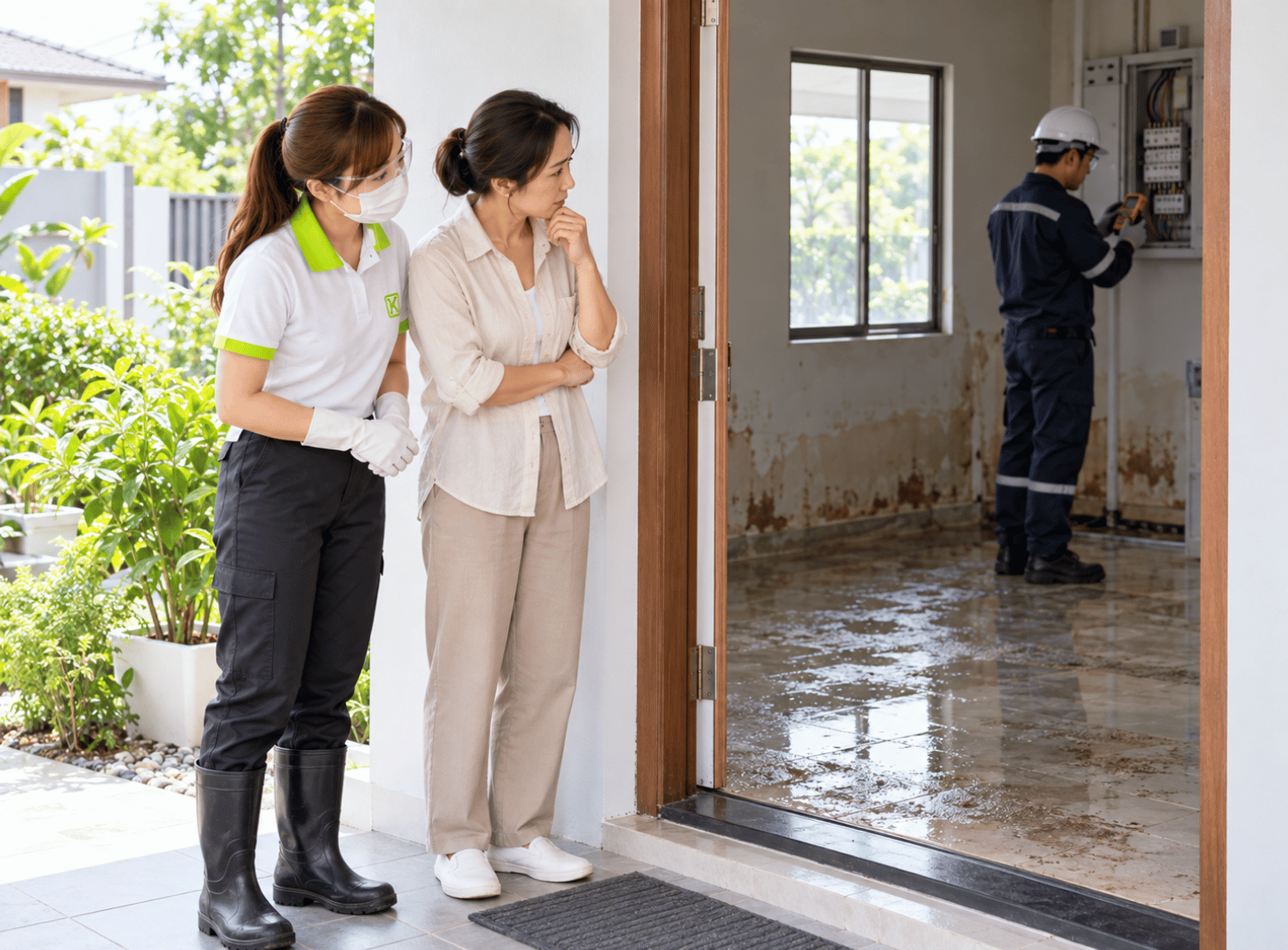
A practical safety guide for households in Thailand
When floodwater recedes, it is natural to want to rescue belongings and remove mud immediately. Cleaning your home after a flood should begin only after you check the building, electricity, gas supply, water contamination, and the risk of more flooding. Once the property is safe, document the damage and start removing water and moisture promptly. Delaying after the safety check can increase mold growth and permanent damage.
Quick Answer
Do not enter a flooded property or switch on utilities until the immediate hazards have been assessed. Follow local return notices when authorities issue them. If the building, electrical system, or gas supply may be damaged, ask the appropriate professional to inspect it. Photograph the damage before moving items. After the site is cleared for entry, wear protective equipment, remove standing water, clean contaminated surfaces, and dry the home as quickly as conditions safely allow.
Key Takeaways
• Check the structure, electricity, gas supply, and flood conditions before entering.
• Keep children, pets, older adults, and people with health conditions away from the cleanup area.
Take clear photographs and contact your insurer before discarding damaged property when possible.
Treat floodwater, mud, and soaked materials as contaminated unless authorities confirm otherwise.
Begin drying promptly after the property is safe because wet materials can support mold growth.
Use qualified specialists for electrical work, structural damage, sewage, chemical contamination, and extensive mold.
Check Whether It Is Safe to Return
The first stage of cleaning your home after a flood happens before anyone carries a bucket or broom inside. Check official notices for your area and look for continuing water movement, unstable roads, fallen power lines, damaged utility equipment, and signs that the building has shifted. Do not walk or drive through moving floodwater to reach the property.
Check Electricity Before Entry
Assume that wet outlets, wiring, circuit panels, appliances, and extension cords are dangerous. Do not touch the electrical panel while standing in water or with wet hands. If the panel is wet, submerged, damaged, or difficult to reach safely, contact a licensed electrician and the relevant electricity authority. Do not restore power until the electrical system and affected equipment have been inspected.
For electricity related assistance in Thailand, contact PEA at 1129 for most provinces or MEA at 1130 for Bangkok, Nonthaburi, and Samut Prakan.
Check for Gas and Fire Hazards
Leave immediately if you smell gas, hear a hissing sound, or see damaged gas equipment. Do not use a flame, switch, phone, or electrical device near the suspected leak. Call the gas supplier or emergency services from a safe location. A particle filtering mask does not protect against a gas leak or unknown chemical vapour.
Inspect the Structure From Outside
Look for leaning walls, a shifted foundation, large cracks, sagging ceilings, damaged stairs, loose roof materials, or floors that appear uneven. Do not enter if any part of the building looks unstable. Ask a qualified engineer or building professional to assess the property. Never rely only on the outside appearance because water can weaken materials behind walls and under floors.
Assume Floodwater Is Contaminated
Floodwater and mud may contain sewage, bacteria, fuel, pesticides, broken glass, nails, and animal waste. Avoid direct skin contact. Keep open wounds covered with waterproof dressings and wash exposed skin with soap and safe water. Seek medical advice if a wound becomes red, swollen, painful, or produces discharge.
Document Damage Before Cleanup
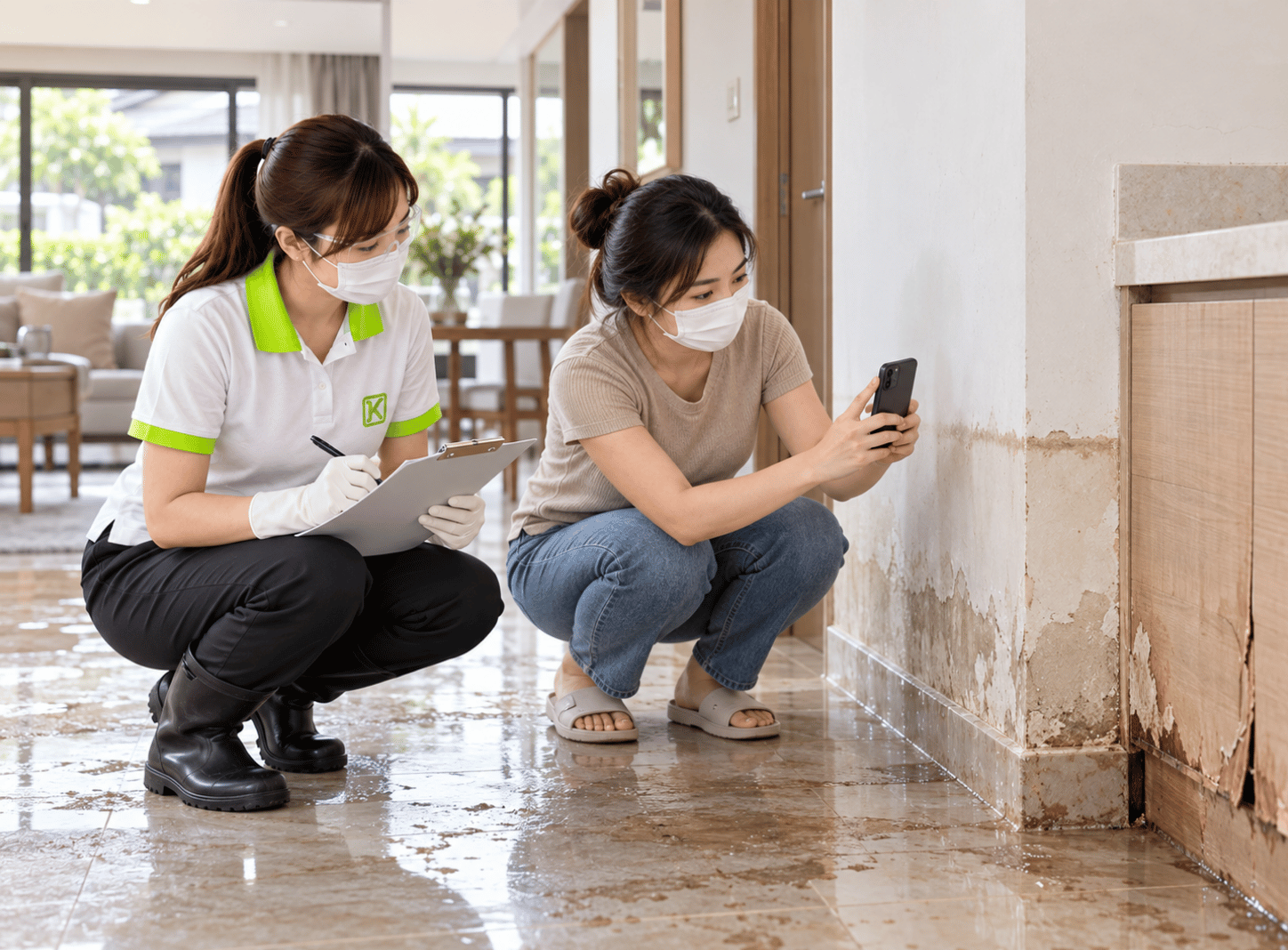
Photographs and written records can support insurance claims, landlord discussions, and requests for assistance. If conditions are safe, document the property before moving, cleaning, or discarding items. Contact the insurer early because evidence and disposal requirements vary by policy.
- Take a wide photograph of every affected room.
- Photograph water marks, wall damage, flooring, furniture, appliances, and important belongings.
- Record model numbers and serial numbers when they can be reached safely.
- List damaged items, estimated purchase dates, and approximate values.
- Keep receipts for protective equipment, temporary repairs, transport, storage, and professional services.
- Record the date, time, name, and advice from each insurer, authority, or contractor you contact.
Prepare People and Equipment
Cleaning your home after a flood can expose people to contaminated material, mold, unstable surfaces, heat, and exhaustion. Work with another adult when possible and tell someone outside the property where you are. Stop if conditions change or you feel unwell.
Keep Vulnerable People Away
Children and pets should not enter the affected area. People with asthma, chronic lung disease, suppressed immunity, or strong mold allergies should not take part in mold cleanup. Arrange a clean place for family members to stay until the home is safe to occupy.
Wear Suitable Protective Equipment
- Waterproof gloves that resist tears and punctures
- Rubber boots with sturdy soles
- Eye protection without ventilation openings
- Long sleeves and washable protective clothing
- A NIOSH approved N95 respirator or greater particle protection when mold or dried contaminated dust may be present
An N95 respirator helps filter airborne particles. It does not make an area with gas, low oxygen, or unknown chemical vapour safe. Leave the property and contact emergency services or a hazardous material specialist if chemical exposure is suspected.
Use Pumps and Generators Safely
Use water removal equipment only after electricity and other hazards are controlled. Never operate a petrol powered pump, pressure washer, or generator inside a home, garage, basement, porch, or partially enclosed space. Place fuel powered equipment outdoors at least 20 feet, or about 6 metres, from doors, windows, and vents. Direct the exhaust away from the building and follow the manufacturer instructions. Carbon monoxide cannot be seen or smelled.
Follow the Safe Cleanup Order
A clear sequence reduces repeated work and prevents clean areas from becoming contaminated again. Adjust the steps to the type of building and the advice of local authorities.
- Control utilities and hazards Confirm that electricity, gas, structural damage, sewage, and chemical risks have been handled before cleanup begins.
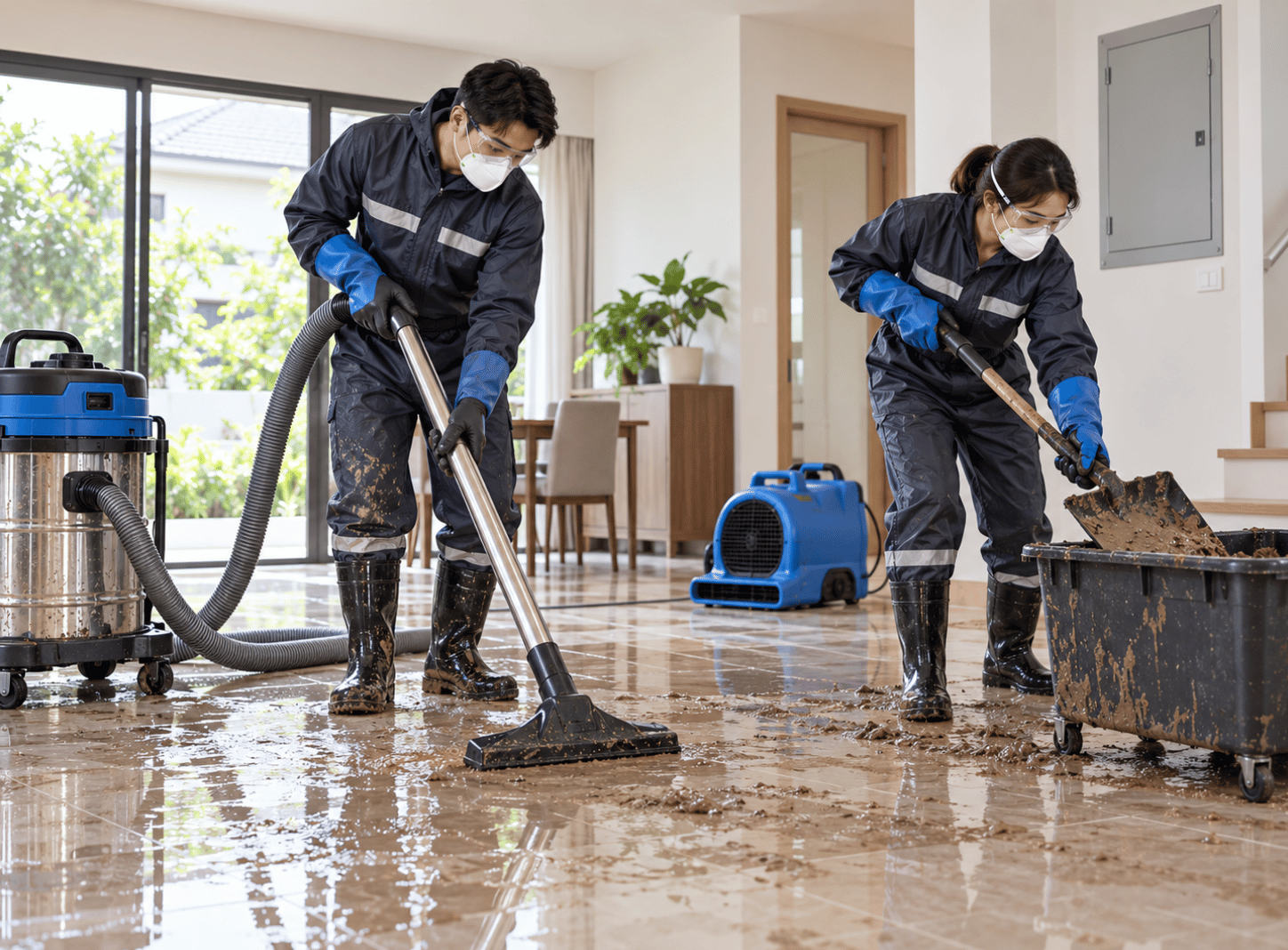
- Remove standing water Use equipment rated for the conditions. Keep electrical connections dry and stop if water begins to rise again.
- Remove mud and loose debris Work slowly because mud can conceal glass, metal, holes, and unstable flooring. Place contaminated waste where it will not be carried back into clean areas.
- Separate items by material Move salvageable hard items to a cleaning area. Keep contaminated materials away from unaffected rooms.
- Discard unsafe porous materials Mattresses, carpet padding, insulation, soft toys, and other absorbent materials may need disposal if they cannot be completely cleaned and dried. Follow local waste instructions and insurer requirements.
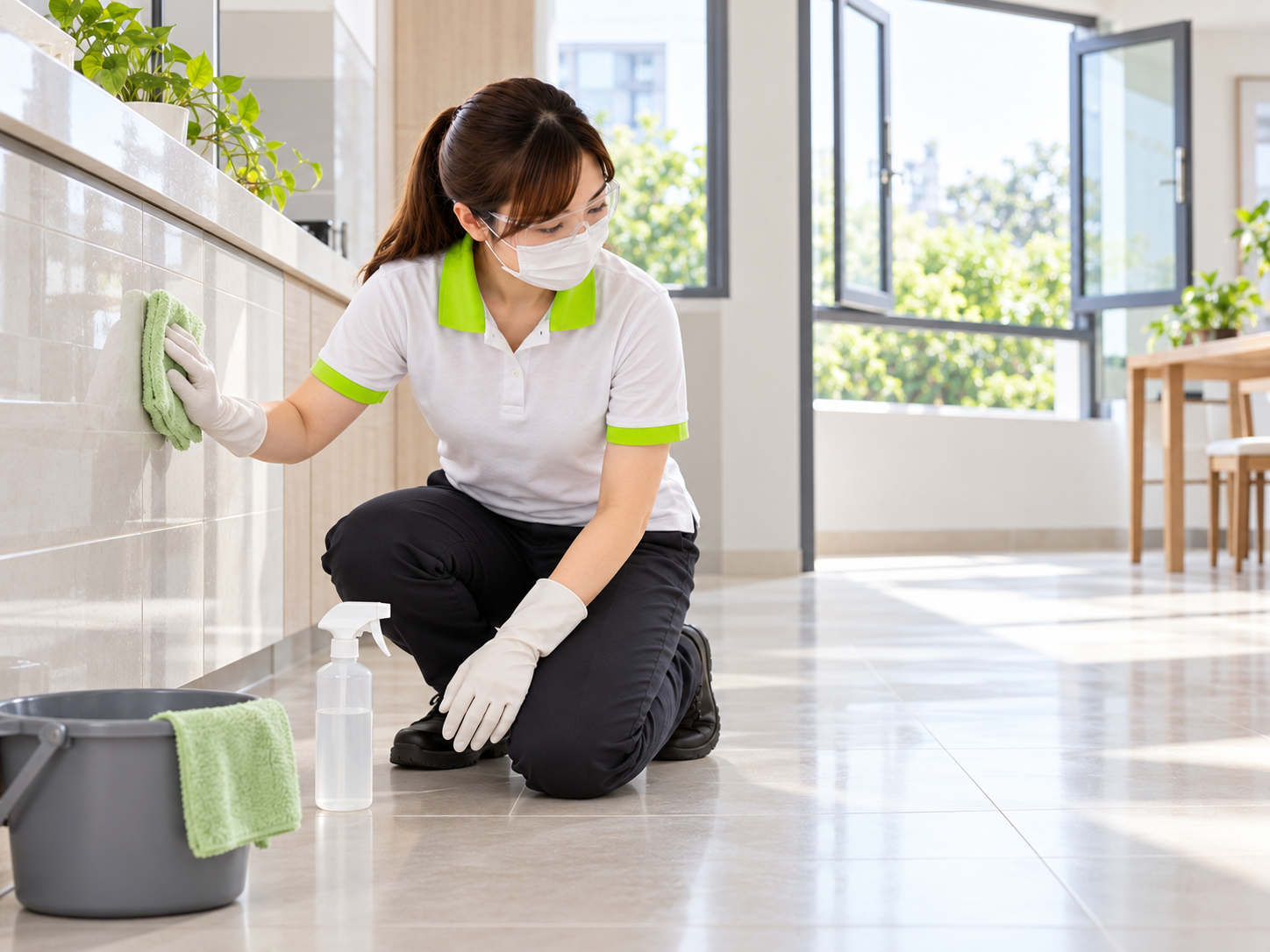
- Clean before disinfecting Remove visible soil with safe water and detergent. Disinfectants work less effectively when mud and organic material remain on the surface.
- Disinfect suitable hard surfaces Choose a product intended for the material and follow the label for dilution, ventilation, contact time, rinsing, storage, and protective equipment.
- Dry the property Open doors and windows when outdoor conditions are safe. Use fans and dehumidifiers only after the electrical system is cleared. Continue drying hidden spaces behind cabinets, under flooring, and inside wall cavities when specialists advise it.
Never Mix Cleaning Products
Never mix bleach with ammonia, acids, toilet cleaners, or other cleaning products. Dangerous gas can form even when the products appear familiar. Keep every product in its original container and use only the amount stated on the label. Leave the area if you experience coughing, burning eyes, dizziness, nausea, or difficulty breathing.
Reduce Mold After Flooding
Mold can begin growing on damp materials quickly. The Centers for Disease Control and Prevention recommends cleaning and drying a flooded home within 24 to 48 hours when possible. Safety checks still come first. Once the property is safe, remove wet materials that cannot be cleaned and dried completely, increase ventilation, and reduce indoor humidity.
Use the CDC guidance for returning to a flooded home and the EPA guide to mold cleanup after disasters as supporting references for cleanup planning.
- Do not direct a fan at visible mold because airflow can spread spores.
- Do not turn on a flooded heating, ventilation, or air conditioning system until a qualified professional has inspected and cleaned it.
- Remove materials that remain wet, smell musty, show visible mold, or contain sewage contamination.
- Call a mold remediation specialist when growth is extensive, hidden inside the ventilation system, linked to sewage, or returning after cleaning.
Protect Food and Drinking Water
Discard food that touched floodwater and food in packaging that cannot be safely cleaned. Do not taste food to decide whether it is safe. Throw away perishable food that was not kept at a safe temperature during a power cut. Undamaged commercially sealed metal cans may sometimes be cleaned and sanitised, but follow current public health instructions for the affected area.
Use bottled water or water prepared according to local public health advice when the supply may be contaminated. Do not use unsafe water for drinking, cooking, making ice, brushing teeth, washing dishes, or preparing infant formula. Private wells, storage tanks, and affected plumbing may need testing, disinfection, or professional flushing before use.
Know When to Call a Specialist
Stop do it yourself cleanup and seek qualified help when the work involves electrical damage, gas leaks, a damaged foundation, unstable walls or ceilings, sewage, fuel, pesticides, industrial chemicals, asbestos, extensive mold, or a flooded ventilation system. Professional restoration may also be safer when a large area is affected or family members have medical conditions that increase their risk.
What a Maid Can Safely Support
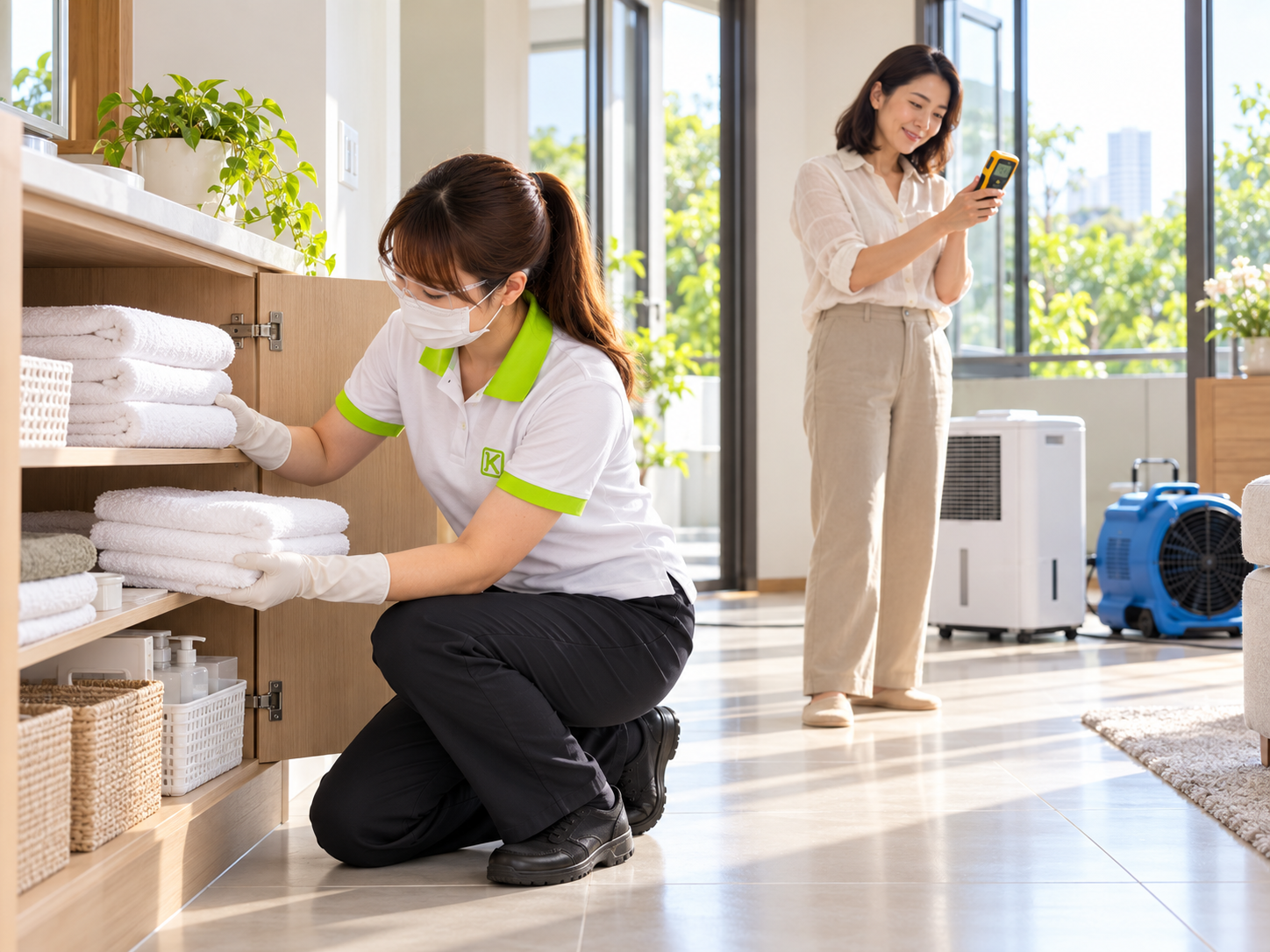
A maid can support routine household recovery only after the property has been declared safe and hazardous materials have been removed. Suitable tasks may include organising clean belongings, wiping approved hard surfaces, laundering washable items, and helping maintain ventilation and ordinary cleaning routines.
A maid should not inspect wiring, restore power, enter an unstable building, remove sewage, handle unknown chemicals, operate unsafe pumping equipment, repair damaged structures, or perform extensive mold remediation. Define the work clearly, provide appropriate protective equipment, allow rest breaks, and never ask one person to manage hazardous restoration alone.
For routine household support after professional safety clearance, learn about Kiidu maid services in Thailand. For rainy season prevention and regular home care, see weekly maid tasks for Bangkok rainy season.
Emergency Contacts in Thailand
Save the appropriate numbers before entering an affected area. Use emergency lines only for relevant emergencies and follow instructions from local authorities.
- 1669 Emergency medical services through the National Institute for Emergency Medicine
- 1784 Department of Disaster Prevention and Mitigation
- 1129 Provincial Electricity Authority
- 1130 Metropolitan Electricity Authority
Official information is available from the National Institute for Emergency Medicine and the Department of Disaster Prevention and Mitigation.
Quick Safety Checklist
- Local return notices and current flood conditions have been checked.
- The building shows no obvious sign of instability.
- Electricity and gas hazards have been assessed by the right professional.
- Children, pets, and vulnerable people are away from the cleanup area.
- Damage has been photographed and the insurer has been contacted when applicable.
- Protective equipment, clean water, waste bags, and safe tools are ready.
- Floodwater and mud are being treated as contaminated.
- The cleanup team knows when to stop and call a specialist.
Frequently Asked Questions
Can I Enter as Soon as the Water Recedes
No. Check local notices, electricity, gas, structural damage, and the possibility of more flooding first. If any hazard is uncertain, wait for the relevant authority or qualified professional.
Should I Photograph Damage Before Cleaning
Yes, when it is safe to do so. Photograph each room, water marks, damaged belongings, appliances, and structural concerns before moving or discarding items. Ask the insurer what evidence and receipts are required.
How Soon Should the Home Be Dried
Begin water removal and drying as soon as the property is safe. Aim to clean and dry wet materials within 24 to 48 hours when possible because prolonged moisture encourages mold growth.
Can I Use Bleach on Every Surface
No. Some materials can be damaged and some contamination requires specialist treatment. Clean visible dirt first, choose a product suitable for the surface, and follow the product label. Never mix cleaning products.
When Must I Stop Cleaning Myself
Stop when you find unstable structures, wet electrical equipment, a gas smell, sewage, unknown chemicals, extensive mold, or symptoms such as dizziness, breathing difficulty, nausea, or burning eyes. Leave the area and contact the appropriate professional or emergency service.
Can a Maid Clean the Home After a Flood
A maid can help with ordinary cleaning and organisation after qualified professionals have cleared the property and removed hazardous contamination. Electrical work, structural repair, sewage cleanup, chemical hazards, and extensive mold remediation require trained specialists.
Final Safety Reminder
Cleaning your home after a flood is not a race. Check hazards first, document the damage, and then begin water removal and drying without unnecessary delay. A clear boundary between routine cleaning and hazardous restoration protects the household and everyone helping with recovery.
This article provides general safety information and does not replace instructions from emergency services, public health authorities, electricians, engineers, insurers, or restoration specialists. If the property appears unsafe or anyone may be in immediate danger, leave the area and contact emergency services.