
How to Help Your Child Bond with a Nanny
10 Gentle Steps for a Calm and Secure Transition

A healthy nanny and child relationship is built through repeated experiences of safety, comfort, and reliable care. Parents can support the process by preparing the child, sharing useful information with the nanny, keeping departures clear, and allowing the relationship to grow without pressure. The goal is not instant affection. The goal is a secure arrangement in which the child knows what to expect and the nanny responds respectfully to the child’s needs.
The American Academy of Pediatrics recommends brief, consistent goodbye rituals and keeping promises about returning when children experience separation anxiety. Its guidance on helping children manage separation anxiety supports a calm and predictable approach rather than long or uncertain farewells.
Key Takeaways
- Initial crying or hesitation can be a normal response to a new caregiver.
• Trust usually grows through repeated care, familiar routines, and reliable reunions. - A gradual handover can reduce pressure on both the child and the nanny.
- Parents should never force hugs, eye contact, or physical affection.
- Clear duties, safety rules, and daily communication help the adults provide consistent care.
- Persistent fear, unexplained injuries, harsh handling, or repeated boundary violations require immediate attention.
What Bonding with a Nanny Really Means
Bonding does not require a child to greet the nanny with excitement on the first day. It means the child gradually recognizes the nanny as a reliable person who can provide comfort, help, play, and protection within agreed boundaries. A reserved child may still be developing a secure caregiver relationship even when affection is not obvious.
Children learn through patterns. When the nanny responds calmly to hunger, tiredness, frustration, play, and everyday transitions, the child begins to understand that care is predictable. UNICEF describes responsive caregiving and early learning as central to supporting child development. Talking, singing, playing, and responding to a child’s signals can be woven into normal daily routines.
Age, temperament, language, previous caregiving experiences, illness, hunger, and major changes at home can all influence the transition. Babies may react differently as awareness of unfamiliar people develops. Toddlers may protest strongly because they understand that a parent is leaving but do not yet manage time or emotion like an older child. School age children may need more information, privacy, and a voice in how routines are organized.
Crying alone does not prove that the nanny is a poor match. Look at the full pattern. Notice whether the nanny stays patient, follows the care plan, respects the child’s boundaries, communicates clearly, and helps the child settle over time. Also pay attention to whether distress becomes more intense, is linked to a particular action, or appears with other warning signs.
Ten Gentle Steps for Building Trust
Step 1: Explain the Nanny’s Role in Simple Language
Tell your child who the nanny is, what they will do together, and when you will return. Keep the explanation honest and suitable for the child’s age. A toddler may only need to hear, “Nina will play with you and give you lunch while I work. I will come back after your nap.” An older child may want to know who will help with homework, transport, meals, or activities.
Avoid describing the nanny as a replacement parent. Explain that parents and nannies have different roles and that children can feel safe with more than one trusted caregiver. Repeating the same simple message before the first day can make the new arrangement easier to understand.
Step 2: Share Routines, Preferences, and Comfort Cues

Give the nanny a written overview of meals, sleep, play, toileting, school, medicine instructions from qualified professionals, allergies, emergency contacts, and the child’s usual ways of seeking comfort. Include useful details such as favorite books, words the child uses for basic needs, signs of tiredness, and situations that commonly cause frustration.
The purpose is consistency, not rigid control. The nanny should understand what matters most while still having room to respond to the child in the moment. Families preparing for infant care can also review Kiidu’s guide to choosing the best newborn nanny in Bangkok.
Step 3: Create a Gradual Handover Plan
When schedules allow, begin with short visits while a parent remains present. Let the nanny observe the child’s normal routine, then invite the nanny to join a familiar activity. Gradually increase the nanny’s responsibility and the time the parent is out of sight. The pace should reflect the child’s response and the family’s practical needs.
A gradual handover is not always possible. If care must begin quickly, prepare as much as you can, keep the first routine simple, and make sure the nanny knows how to contact the parents and respond to an emergency. Do not promise that a child will never cry. Focus on providing calm, safe, and predictable care when crying occurs.
Step 4: Keep Familiar Objects and Routines Available
A favorite toy, blanket, book, song, or family photo can provide continuity during a transition. Keep meals, naps, school preparation, and bedtime as predictable as reasonably possible. Familiar routines give the child fewer changes to process while getting to know the nanny.
Do not introduce many new rules, activities, and caregivers at the same time unless necessary. If the family has recently moved, welcomed a new baby, or started a new school, tell the nanny. The child may need more patience because several changes are happening together.
Step 5: Agree on Safety and Communication Expectations
Before the nanny takes sole responsibility, discuss discipline, food, sleep, transport, visitors, photography, privacy, screen use, outdoor play, medicine boundaries, emergency contacts, and the form of daily updates. Written expectations reduce confusion and help the child receive consistent messages from every adult.
| Topic | Family decision | What to confirm |
|---|---|---|
| Discipline | Use calm and respectful guidance | Words and responses that are allowed |
| Screen use | Follow family rules and suitable guidance | Approved content, timing, and supervision |
| Transport | Use approved routes and child safety equipment | Drivers, vehicles, and emergency contacts |
| Updates | Share a concise daily summary | Meals, sleep, mood, activities, and concerns |
| Privacy | Protect family and child information | Photos, messages, visitors, and device access |
Step 6: Stay Nearby During Familiar Activities

During early visits, let the child choose whether to watch, play beside the nanny, or join directly. The parent can remain nearby as a secure base without directing every interaction. A simple activity such as reading, blocks, drawing, or preparing a snack gives the nanny and child something predictable to share.
If the child repeatedly returns to the parent, respond calmly and allow another attempt. Avoid saying that the child is rude, difficult, or too old to be afraid. Pressure can make the child associate the nanny with conflict rather than safety.
Step 7: Let the Nanny Respond to Small Everyday Needs
Trust grows when the nanny becomes a reliable source of practical help. Begin with manageable tasks such as offering water, helping with shoes, reading a story, preparing an agreed snack, or comforting the child after a minor frustration. The parent can support the nanny’s role without immediately taking over every time the child protests.
Responsive care means noticing the child’s signals and responding in a timely, appropriate way. It does not mean giving the child everything they request. The nanny can maintain boundaries while acknowledging feelings, offering limited choices, and helping the child return to a calm activity.
Step 8: Never Force Affection or Physical Contact
A child should not be required to hug, kiss, sit on, or make eye contact with the nanny to prove that bonding is happening. Let the child approach at a comfortable pace. The nanny can offer connection through play, conversation, choices, and practical care without demanding physical affection.
Respecting boundaries supports body autonomy and gives the child a clear message that discomfort will be heard. Parents should apply the same principle to relatives, visitors, and other caregivers so the child receives a consistent standard.
Step 9: Use a Short and Confident Goodbye Routine
Tell the child that you are leaving, give a brief and familiar goodbye, explain the return in terms the child understands, and then leave. For example, say, “I will come back after your afternoon snack.” Avoid disappearing without saying goodbye because an unexpected absence can make future departures harder to trust.
Long farewells can communicate uncertainty and restart the child’s distress. Stay warm but decisive. If the child cries, the nanny can acknowledge the feeling and move into a familiar soothing routine. Return when promised whenever possible because reliable reunions help the child learn that separation is temporary.
Step 10: Make Time with the Nanny Enjoyable and Predictable
Repeat simple activities the child enjoys, such as songs, stories, outdoor walks, pretend play, puzzles, or helping with a small household routine. Shared rituals create positive memories and give the nanny useful opportunities to learn how the child communicates and solves problems.
The activity does not need to be elaborate or expensive. UNICEF’s guidance on early childhood development emphasizes health, nutrition, protection, security, early learning, and responsive caregiving. Ordinary talking, singing, and playing can support connection when they are attentive and suitable for the child.
Adjust the Plan for Age and Temperament
| Child’s stage | Helpful approach | What to avoid |
|---|---|---|
| Baby | Share feeding, sleep, soothing, and sensory cues | Too many unfamiliar changes at once |
| Toddler | Name feelings and offer two simple choices | Long explanations or forced contact |
| Preschool child | Use visual routines, stories, and repeated rituals | Threats or promises that cannot be kept |
| School age child | Explain duties and invite reasonable input | Ignoring privacy, opinions, or established routines |
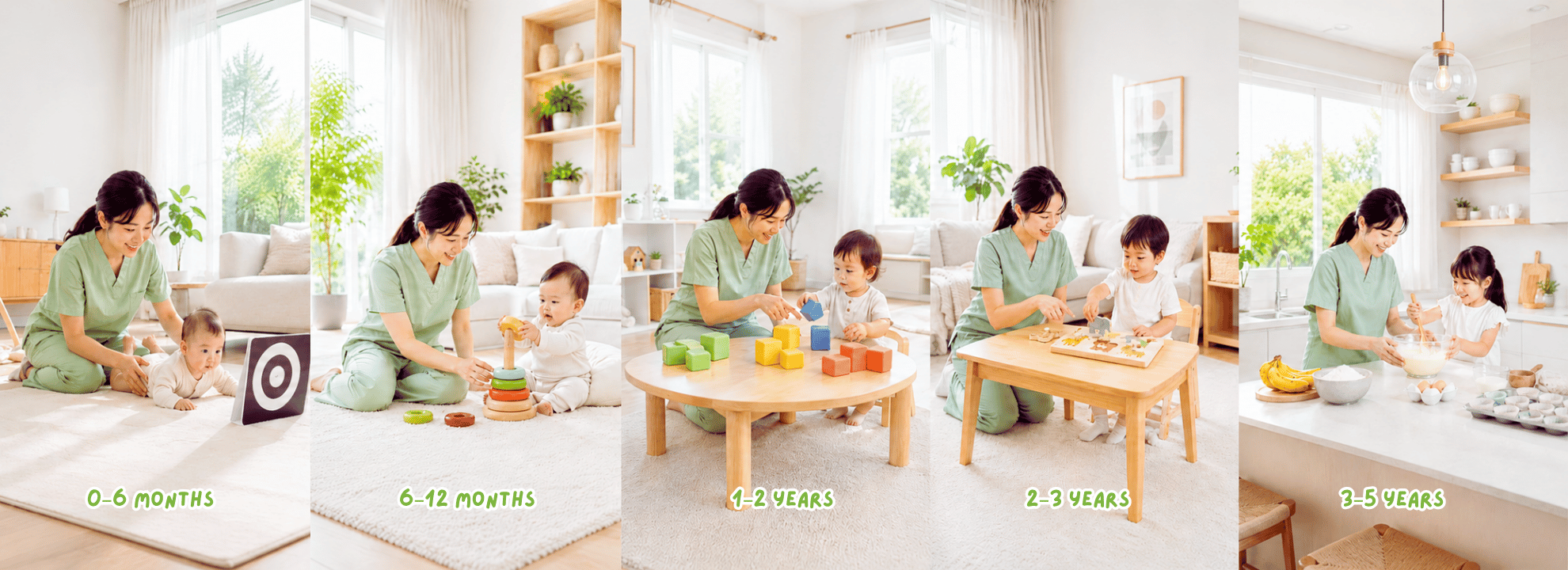
Temperament matters as much as age. An outgoing child may interact quickly but still need help with separation. A cautious child may watch for several visits before joining. Measure progress against the child’s own starting point rather than another child’s behavior.
In multilingual homes, share essential words for food, toileting, pain, comfort, safety, sleep, and family members. The nanny does not need to speak every family language perfectly, but the child should have a reliable way to communicate basic needs. Visual choices and consistent gestures can support understanding while language familiarity grows.
Evaluate Progress and Respond to Concerns
Look for gradual signs of comfort rather than one dramatic moment. Positive signs may include relaxed play, accepting help, settling sooner after a parent leaves, talking about the nanny without distress, sharing attention, or seeking the nanny when tired or upset. Progress may vary from day to day, especially when the child is unwell or routines change.
Signs That the Transition May Need More Time
- The child is upset mainly during separation but settles with calm support.
- The child is cautious but can play or accept help when given space.
- Difficult days are linked to tiredness, illness, travel, or another routine change.
- The nanny responds patiently, follows the care plan, and reports events clearly.
Warning Signs That Require Immediate Attention
- Persistent or escalating fear that is linked to a particular person or action.
- Unexplained injuries, unsafe supervision, harsh handling, threats, or humiliation.
- Repeated violations of discipline, privacy, transport, visitor, or communication rules.
- Major changes in sleep, eating, toileting, behavior, or mood that continue without a clear explanation.
- A nanny who refuses reasonable communication or gives conflicting accounts of important events.

Take immediate steps to protect the child if there is a safety concern. Record specific observations, discuss concerns directly when safe, and contact a pediatrician, qualified child development professional, or relevant authority when needed. A general bonding guide cannot replace an individual assessment of persistent distress, injury, developmental concerns, or suspected abuse.
Choosing Professional Nanny Support in Thailand
A successful transition begins with an appropriate match. Families should consider the child’s age, routines, health needs, language, temperament, schedule, location, household expectations, and the exact duties required. Experience is important, but communication style, patience, judgment, and willingness to follow the family care plan also matter.
When comparing agencies, ask which identity, work eligibility, employment history, reference, training, and background checks apply to each candidate. Ask about interview arrangements, service terms, replacement policies, and ongoing support. Kiidu’s guide on how to choose a nanny agency in Bangkok provides additional questions families can use before making a decision.
Families who need a broader overview can also read Kiidu’s guide to trusted childcare in Bangkok for children aged 0 to 12. Confirm the actual scope of every service rather than assuming that all agencies, packages, or caregivers provide the same screening, training, backup, or supervision.
Kiidu Practical Perspective
The best match is not defined by experience alone. A nanny may have strong technical skills but still need clear information about a child’s routines, language, boundaries, and comfort cues. Parents can improve the transition by preparing this information before care begins, interviewing candidates carefully, and agreeing on how the first days will be managed.
A thoughtful match should support both safety and relationship quality. Give the nanny a fair opportunity to build trust, but continue observing the child’s well being and the nanny’s professional conduct. Good care depends on respectful cooperation, clear expectations, and regular review as the child’s needs change.
Conclusion
Knowing how to help your child bond with a nanny is less about creating instant affection and more about building a reliable pattern of safety. Prepare the child, share routines, introduce the nanny gradually when possible, keep goodbyes clear, and let trust grow through responsive everyday care.
Stay attentive without judging every tear as failure. Look for gradual comfort, respectful caregiving, and honest communication. If progress is slow, adjust the pace. If safety or boundaries are compromised, act immediately. The right goal is a secure relationship that respects the child, supports the nanny, and gives the family confidence in the care arrangement.

Frequently Asked Questions
How long does it take for a child to bond with a nanny?
There is no single timetable. Some children become comfortable within days, while others need more time. Age, temperament, previous experiences, family changes, and the consistency of care all influence the process. Look for gradual signs of comfort rather than expecting immediate affection.
What should parents do on the first day with a new nanny?
Explain the plan simply, review routines and emergency information, begin with a familiar activity, and stay nearby for part of the handover when possible. Use a short goodbye and tell the child when you will return in terms they understand.
Should I leave if my child cries with the nanny?
Crying during separation can be normal. If the child is safe and the nanny responds calmly, follow the agreed goodbye routine rather than repeatedly leaving and returning. Change the plan if distress escalates, does not settle over time, or appears with other concerning signs.
How can a nanny help a toddler feel comfortable?
The nanny can name feelings, offer two simple choices, repeat familiar activities, maintain routines, and respond calmly to small needs. Physical affection should never be forced. The toddler should be allowed to approach at a comfortable pace.
Can a child bond with a nanny who speaks another language?
Yes. Share essential words for comfort, food, toileting, pain, sleep, and safety. Consistent gestures, visual choices, routines, songs, and play can support understanding while the nanny and child learn each other’s communication style.
When should parents reconsider the nanny arrangement?
Reconsider the arrangement when fear becomes persistent or more intense, safety rules are ignored, injuries are unexplained, the nanny uses harsh handling, boundaries are repeatedly violated, or communication about important events is unreliable. Seek professional guidance when a child’s distress or behavioral changes continue.