
Post Surgery Care in Bangkok: Who Can Help During Recovery at Home?

The moment you are told you can leave the hospital, a new set of practical questions begins. Who will take you home? Who can prepare meals, help with daily routines, or accompany you to a follow up appointment? For someone recovering alone in Bangkok, an expat without family nearby, or a household where relatives cannot be present throughout the day, planning support before discharge can make the transition home easier to manage.
| Quick Answer: Post surgery care in Bangkok may involve support from family, a professional caregiver, a registered nurse, or a rehabilitation professional. Caregivers can assist with daily routines, meals, mobility, personal care, errands, and appointments. Clinical tasks such as wound care, injections, catheter care, or medical monitoring may require a qualified healthcare professional according to the patient’s discharge plan. |
| Medical Note: This article provides general information and does not replace instructions from your surgeon, hospital, nurse, physiotherapist, or other qualified healthcare professional. Recovery needs vary by procedure and individual health status. |
Key Takeaways
- Plan practical support before hospital discharge rather than waiting until you are already home.
- Choose the level of support according to the discharge plan and the tasks the patient actually needs help with.
- A caregiver can support daily living, while clinical care may require a registered nurse or another qualified healthcare professional.
- Prepare the home, transport, meals, mobility support, contact details, and follow up appointments in advance.
- If symptoms change or an emergency occurs, follow the hospital’s instructions and contact the appropriate medical service promptly.
What Post Surgery Care in Bangkok May Involve
Post surgery care in Bangkok is not one single service. The right arrangement depends on the procedure, anaesthesia, mobility, home environment, medical conditions, discharge instructions, and whether the patient has reliable support nearby. MedlinePlus recommends planning for personal care, household tasks, transport, medicines, equipment, and follow up appointments before leaving hospital.
For many patients, support at home is mainly practical. They may need help getting in and out of bed, bathing, dressing, preparing meals, shopping, travelling to appointments, or keeping frequently used items within reach. These needs do not automatically mean clinical nursing is required.

Who Can Help During Recovery?
| Support Type | Typical Role | Important Boundary |
| Family or friend | Companionship, meals, transport, basic daily help, and communication with relatives. | Ability and availability vary. Medical tasks should follow professional guidance. |
| Professional caregiver | Daily living support, personal care, mobility assistance, errands, routines, and appointment support. | A caregiver is not a substitute for licensed clinical care. |
| Registered nurse | Clinical care within professional qualifications and the patient’s medical plan. | Tasks depend on orders, professional scope, and the patient’s condition. |
| Rehabilitation professional | Prescribed support for mobility, strength, balance, transfers, or daily function. | Exercises and rehabilitation plans should be set by the appropriate qualified professional. |
What a Caregiver Can Help With at Home
A professional caregiver can provide non clinical support that makes daily routines easier while the patient follows the medical team’s recovery instructions. The exact duties should be agreed before the service begins and should stay within the caregiver’s training and job scope.
Personal Care and Daily Routines
- Help with bathing, dressing, grooming, and toileting when appropriate.
- Prepare meals according to the patient’s stated dietary instructions.
- Keep essential items within easy reach and help maintain an orderly recovery space.
Mobility and Practical Support
- Assist with transfers and movement only in ways that have been approved or demonstrated by the medical or rehabilitation team.
- Support safe routines around the home and help reduce unnecessary trips up and down stairs when possible.
- Arrange or accompany transport to follow up appointments when included in the agreed role.
Errands and Family Communication
- Help with groceries, basic errands, and practical household tasks.
- Provide companionship and routine reminders based on an established care plan.
- Share practical updates with relatives when the patient has agreed to this communication.
When a Nurse or Other Qualified Healthcare Professional May Be Needed
Clinical care should be separated clearly from general caregiving. MedlinePlus notes that home health nurses may be involved with wounds, medicines, catheters, and other medical needs after a hospital stay. The exact clinical tasks required after surgery depend on the procedure and the patient’s discharge plan.
- Wound assessment or wound care that the medical team has assigned to a qualified professional.
- Prescribed injections, intravenous treatment, or other medication related procedures that require clinical training.
- Catheter, drain, or medical device care when professional management is required.
- Clinical monitoring or assessment requested by the treating team.
- Any situation where the patient’s condition requires medical judgement rather than practical daily support.
Caregivers should not diagnose symptoms, change medication doses, make clinical decisions, or independently perform procedures outside their qualifications. If you are unsure whether a task requires a nurse, ask the surgeon, discharge nurse, or hospital team before arranging home support.
When Rehabilitation Support May Be Appropriate
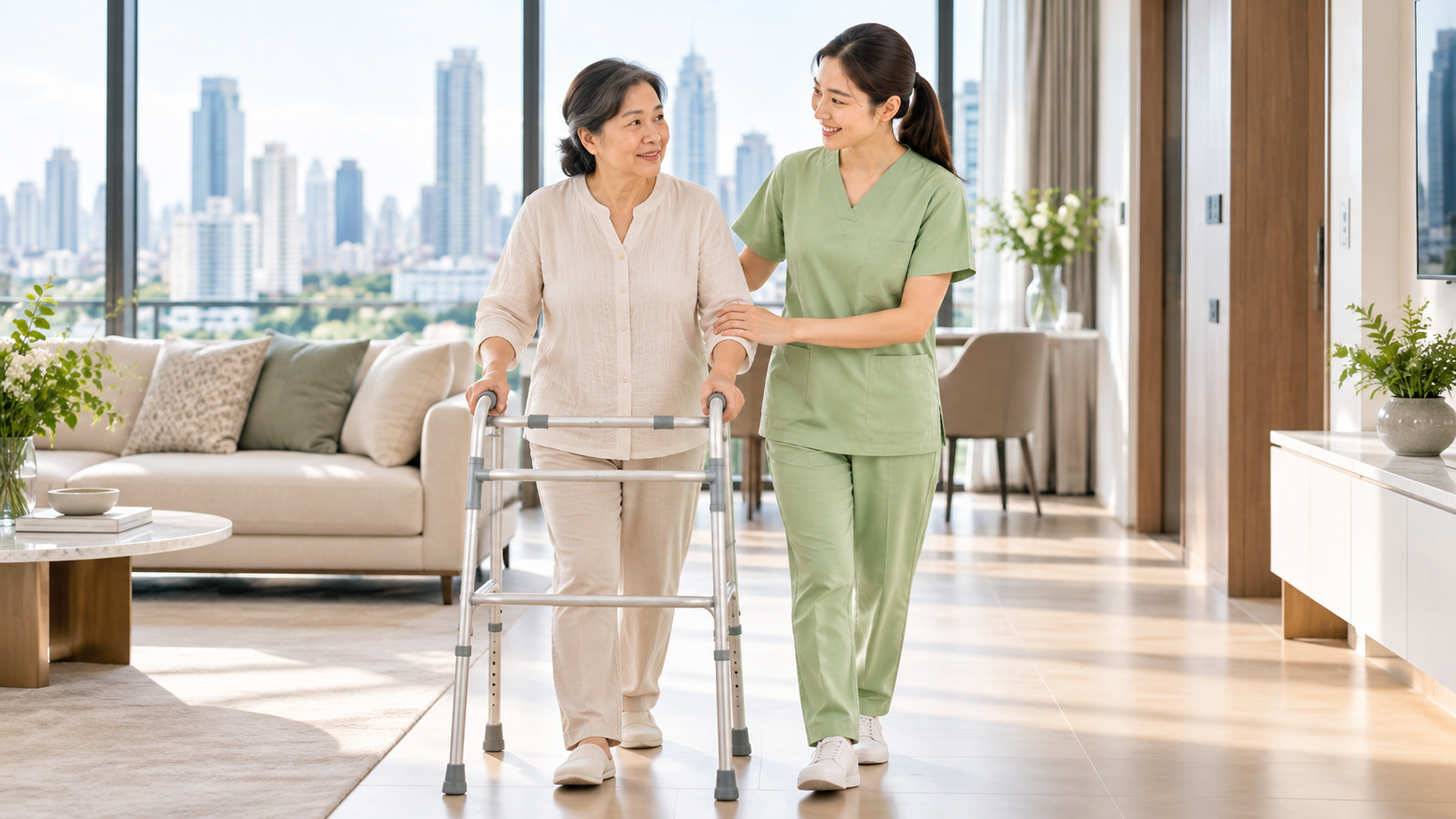
Some patients need rehabilitation after surgery, particularly when walking, balance, strength, transfers, or daily activities are affected. A physiotherapist or occupational therapist may assess function, recommend exercises, teach safe movement, or suggest home adaptations. A caregiver may assist with an established routine only when it has been clearly explained by the appropriate healthcare professional.
How to Prepare the Home Before Discharge
Preparing the home can reduce unnecessary physical effort during recovery. MedlinePlus advises keeping frequently used items easy to reach, reducing tripping hazards, using good lighting, and asking the healthcare team whether equipment such as a walker, shower chair, or other aid is needed.
- Set up the main recovery area so essential items such as water, phone, charger, and approved supplies are easy to reach.
- Clear loose rugs, cords, clutter, and other trip hazards from walking paths.
- Check that the bathroom and sleeping area can be used safely according to the patient’s mobility needs.
- Prepare meals and household supplies before the patient returns home.
- Keep discharge instructions, medicine information, appointment details, and important contact numbers together in an accessible place.
- Ask the hospital team whether any equipment or home changes are needed for the specific procedure.
Plan Transport Home and Follow Up Visits
Before discharge, ask the hospital team what type of transport is appropriate for the patient’s mobility and medical needs. Arrange the journey in advance and make sure the person accompanying the patient understands the discharge instructions. After a general anaesthetic, NHS guidance says someone will need to collect the patient and advises having someone stay with them for at least 24 hours. Follow the specific instructions from the treating hospital, since advice can differ by procedure and anaesthesia type.
Living Alone in Bangkok After Surgery
Living alone can make practical planning especially important. Before the procedure, map out who will help with transport, meals, personal care, supplies, and follow up visits. If family or friends cannot provide enough help, discuss professional support with the hospital team or a care provider before discharge.
- Who will take you home and help you settle in?
- Can you prepare food and reach essential items without overexertion?
- Do you need help with bathing, dressing, toileting, or movement?
- Who can collect supplies or accompany you to appointments?
- Who should be contacted if your symptoms change?
- Do you need daytime support, overnight support, or support across multiple shifts?
What About Cosmetic Surgery or Short Term Recovery?
People recovering after cosmetic or elective procedures may also need temporary help with daily routines, meals, transport, mobility, or appointments. The level and duration of support should be based on the surgeon’s instructions rather than a generic timeline. Recovery after a facial procedure, body procedure, eye procedure, or other elective surgery can vary substantially between patients.
How Long Might Recovery Support Be Needed?
There is no single number of days that applies to every patient. The medical team should guide the recovery plan, and the level of support can be reviewed as mobility and independence improve.
| Factor | Why It Matters |
| Type of procedure | Different procedures come with different restrictions, symptoms, and follow up plans. |
| Anaesthesia | Temporary effects may change how much supervision or practical help is needed after discharge. |
| Mobility | Difficulty walking, transferring, or using stairs can increase daily support needs. |
| Home layout | Stairs, bathroom access, and distance between rooms can affect how easy recovery is at home. |
| Other medical conditions | Existing conditions can change the recovery plan and level of monitoring required. |
| Discharge instructions | The treating team’s instructions should guide both the type and duration of support. |
Questions to Ask Before Hiring Recovery Support in Bangkok
The best fit depends on what the patient actually needs, not simply on the job title. Use the discharge plan to define the role before comparing candidates or services.
- What practical tasks does the patient need help with each day?
- Is any clinical care required, and if so, which qualified professional should provide it?
- Does the candidate have relevant experience with similar mobility or recovery needs?
- What schedule is required, including daytime, overnight, or multiple shift coverage?
- What language does the patient prefer for daily communication?
- Will transport or appointment accompaniment be part of the role?
- How are identity, experience, references, training, and background information reviewed?
- What is outside the caregiver’s role, and who should be contacted if the patient’s condition changes?
When to Contact the Medical Team or Emergency Services
Warning signs vary by operation, so the patient’s own discharge instructions should come first. If new or worsening symptoms develop, contact the surgeon, hospital, or other healthcare professional according to those instructions. Breathing difficulty, severe bleeding, sudden confusion, or any symptom identified as urgent by the treating team should be assessed promptly.
For a medical emergency in Thailand, call 1669. The National Institute for Emergency Medicine states that the 1669 emergency medical service is available nationwide 24 hours a day.
How Kiidu Can Help With Recovery Support
If the discharge plan includes support at home, Kiidu can help families explore caregiver or nursing options based on the patient’s location, schedule, language preference, daily assistance needs, and required level of care. The goal is to clarify the role first so that non clinical caregiving and clinical nursing are not treated as the same service.
Families can share the patient’s routine, mobility needs, expected duties, preferred schedule, and any instructions from the medical team. Kiidu can then help review suitable options according to current candidate availability and the requirements provided. Clinical needs should always be matched with the appropriately qualified healthcare professional.

| Next Step: Share the location, schedule, language preference, daily support needs, and whether the discharge plan includes clinical care. The Kiidu team can help you compare suitable support options before making a decision. |
Conclusion
Good post surgery care in Bangkok starts with one question: what help will the patient actually need at home? Some people need only practical support with meals, mobility, personal care, errands, and appointments. Others need clinical nursing or rehabilitation as part of the medical plan. The safest approach is to define those needs before discharge, prepare the home and transport, and keep the treating team’s instructions at the center of every decision.
Frequently Asked Questions
What does post surgery care at home usually include?
It may include practical help with personal care, meals, mobility, household tasks, errands, transport, and appointments. Some patients also need nursing or rehabilitation. The exact plan should follow the hospital’s discharge instructions.
How do I know whether I need a caregiver or a nurse?
A caregiver is generally appropriate for non clinical daily support. If the recovery plan includes wound care, injections, catheters, clinical monitoring, or other medical procedures, ask the treating team whether a registered nurse or another qualified healthcare professional is required.
When should I start planning support after surgery?
Planning should begin before discharge when possible. This gives you time to prepare the home, arrange transport, confirm appointments, identify who will help with daily tasks, and clarify whether clinical care is required.
Can I arrange support if I live alone in Bangkok?
Yes. People living alone can plan help around the tasks they cannot safely or comfortably manage themselves. This may include practical caregiver support, overnight help, transport, or clinical nursing depending on the discharge plan and current service availability.
How long will I need a caregiver after surgery?
There is no universal timeline. The answer depends on the procedure, anaesthesia, mobility, home environment, other medical conditions, and discharge instructions. Support can be reviewed and adjusted as the patient becomes more independent.
What should I do if symptoms change during recovery?
Follow the warning signs and contact instructions provided by the hospital or surgeon. If the situation is a medical emergency in Thailand, call 1669.
Sources and Medical References
Accessed 24 September 2026. These sources support general discharge planning, home preparation, anaesthesia aftercare, and emergency contact information. Individual instructions from the treating team take priority.
- MedlinePlus: Leaving the Hospital and Your Discharge Plan
- MedlinePlus: Getting Your Home Ready After the Hospital
- MedlinePlus: Home Health Care
- NHS: After Surgery
- NHS: General Anaesthetic
- National Institute for Emergency Medicine Thailand: 1669