
Rainy Season Mold Removal in Thailand
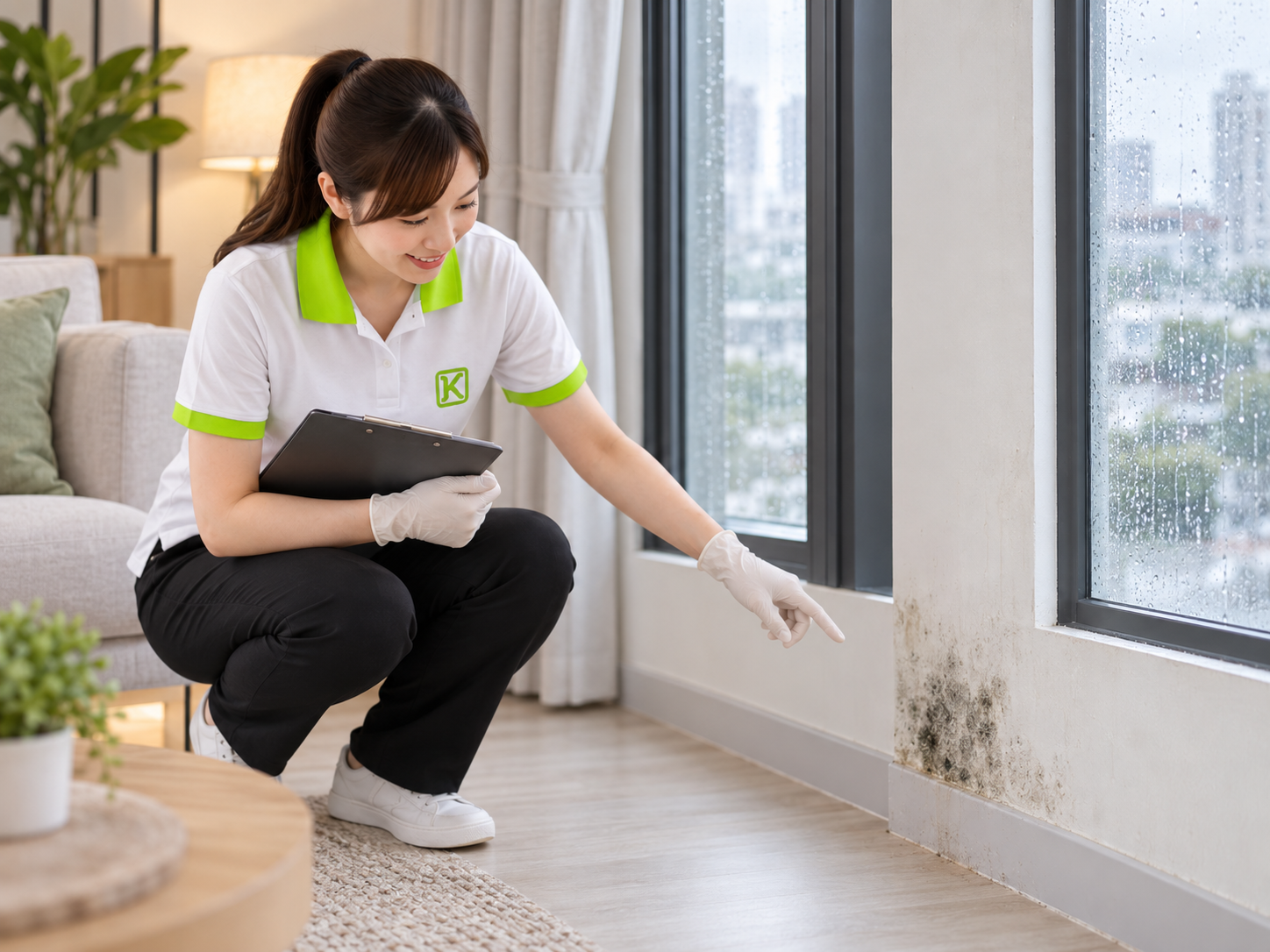
Thailand’s rainy season can bring persistent moisture into walls, wardrobes, bathrooms, and air conditioning areas. Visible mold may return after cleaning when a leak, condensation, or high indoor humidity remains. This guide explains safe rainy season mold removal in Thailand, how to handle common household surfaces, and when professional assessment is the safer choice.
Quick Answer
Start by finding and correcting the source of moisture. Small patches on hard, washable surfaces can often be cleaned with mild detergent and water, followed by complete drying. You may need to remove absorbent materials when mold has grown below the surface. Seek professional help for large areas, recurring growth, sewage contamination, hidden mold, or contamination inside an air conditioning system.
Key Takeaways
• Moisture control is the main part of successful mold removal.
• Wear an N95 respirator, gloves, and sealed goggles before disturbing mold.
• Clean washable hard surfaces with detergent and water, then dry them completely.
• Do not paint or apply sealant over active mold.
• Porous materials may require disposal because mold can grow below the visible surface.
• Large, hidden, recurring, or contaminated mold problems require professional assessment.
Why Mold Grows During Thailand’s Rainy Season
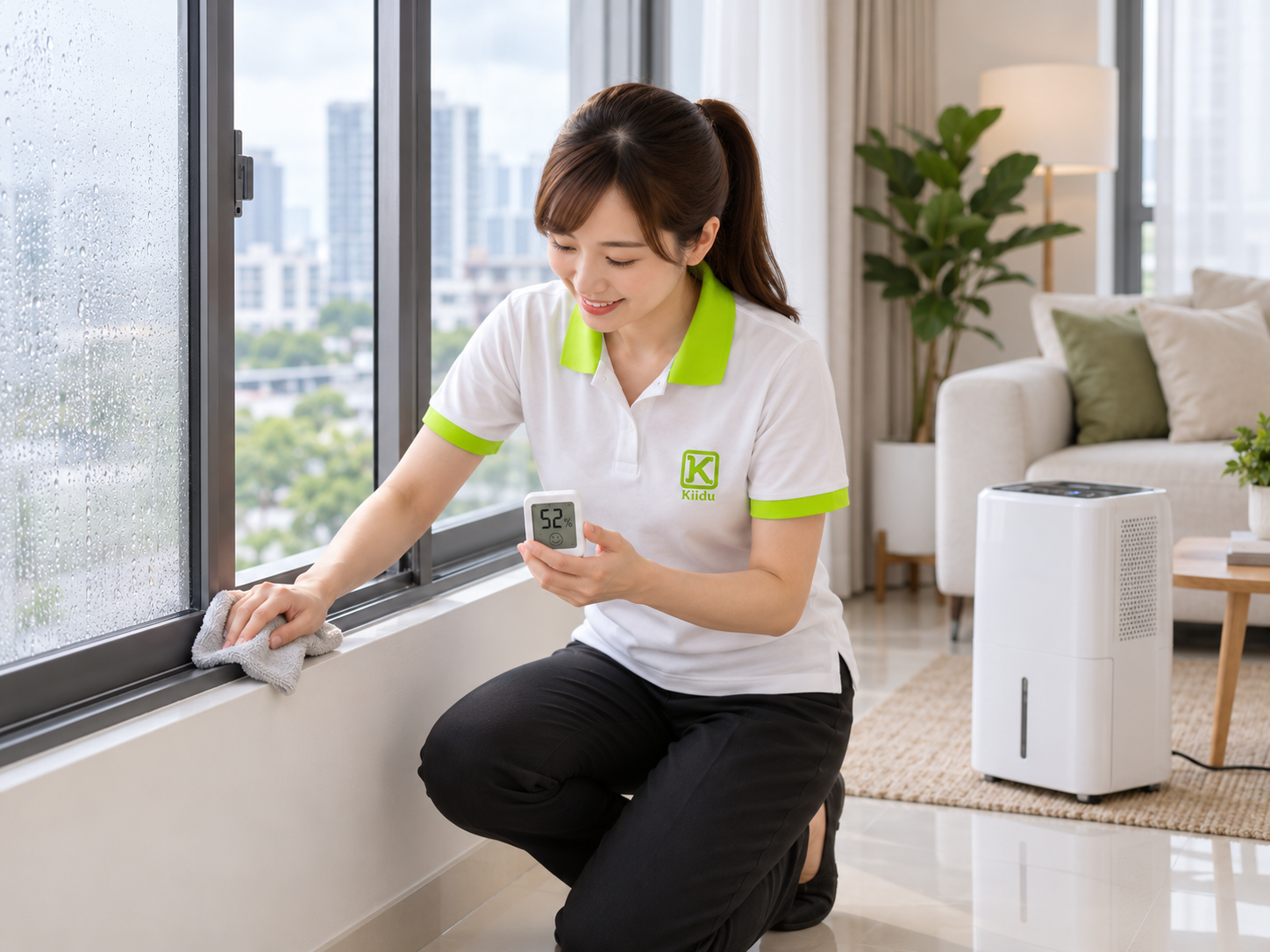
Mold needs moisture and a material that can support growth. During the rainy season, humid outdoor air can enter the home while wet surfaces take longer to dry. Closed rooms, crowded wardrobes, bathrooms without exhaust ventilation, and furniture placed tightly against damp walls can hold moisture for extended periods.
Rainwater leaks are another common cause. Water may enter through roofs, window frames, exterior walls, or balcony doors. Plumbing leaks can remain hidden behind cabinets and wall finishes. Air conditioner drain problems may also allow condensation to collect near walls, ceilings, or floors.
Cleaning visible spots without fixing these conditions usually produces only a temporary result. The United States Environmental Protection Agency explains that moisture control is central to mold control and recommends drying wet materials within 24 to 48 hours where possible. Its guidance also recommends keeping indoor relative humidity below 60 percent, ideally between 30 and 50 percent when practical.
Official guidance A Brief Guide to Mold Moisture and Your Home
Assess the Problem Before Cleaning
Inspect the area before choosing a cleaning method. Measure the visible growth, identify the surface, and look for signs of water damage nearby. A musty smell without visible growth can indicate mold behind wallpaper, cabinets, wall panels, ceilings, flooring, or other concealed materials.
The EPA states that an affected area smaller than about 10 square feet, which is roughly 0.9 square meter, can often be handled by the occupant. This is a general guide rather than a guarantee. Extensive water damage, repeated growth, contaminated water, or health concerns can make a small area unsuitable for household cleaning.
Cleanup guidance Mold Cleanup in Your Home
Questions to Check Before You Start
• What caused the moisture and has that cause been repaired
• How large is the total affected area, including nearby corners and hidden surfaces
• Is the material washable or does it absorb water
• Has the mold returned after earlier cleaning
• Is there visible damage around an air conditioner or ventilation opening
• Did sewage, floodwater, or another contaminated water source affect the area
• Does anyone in the home have asthma, severe allergies, chronic lung disease, or reduced immunity
Safe Equipment and Cleaning Rules
Disturbing mold can release particles into the air. The Centers for Disease Control and Prevention recommends protecting the mouth, nose, skin, and eyes during cleanup. Wear at least a properly fitting N95 respirator, protective gloves, and goggles that provide full eye protection. Keep children, pets, and people with higher health risks away from the work area.
Safety guidance CDC Mold Cleanup Guidelines and Recommendations
Prepare the Area
Move unaffected belongings away from the cleaning area and close interior doors where practical. Ventilate the room to the outdoors when you use cleaning products. Do not direct a fan across visible mold toward other rooms because moving air can spread particles through the home. Follow the label directions for every cleaning product.
Clean Hard Surfaces
Scrub suitable hard surfaces with mild detergent and water. Remove visible residue and dry the surface completely. Do not rely on fragrance to judge whether the area is clean. A musty odor, new moisture, or returning spots can indicate that the source remains unresolved.
Use Cleaning Products Safely
Bleach is not required for every household mold problem. If you choose a product that contains bleach, use it only as directed on the label and provide fresh air. Never mix bleach with ammonia, vinegar, detergent, or any other cleaner. Combining cleaning chemicals can release dangerous gases.
A strong chemical cannot replace moisture control or physical removal. Even mold that is no longer living can still trigger reactions in sensitive people. Clean, dry, and monitor the surface after correcting the moisture problem after the moisture problem has been corrected.
Room by Room Mold Removal
The cleaning method depends on the material. The table below summarizes the safest general approach for common household areas. Always follow the care instructions for the surface or item and stop if the material begins to soften, crumble, peel, or lose its finish.
Area |
Recommended action |
Possible removal |
Professional help |
| Painted wall | Use a damp cloth with mild detergent when the finish is intact, then dry fully | Damaged drywall may need replacement | Call when growth returns or the wall is soft |
| Wardrobe | Empty the cabinet, clean suitable surfaces, inspect the wall behind it, and dry fully | Damaged particleboard may need disposal | Call when growth is hidden behind panels |
| Clothing | Follow the care label and laundry product instructions, then dry completely | Discard items that cannot be cleaned safely | Use a textile specialist for valuable items |
| Bathroom tile | Clean with mild detergent and water, rinse if required, and dry | Usually not required for intact tile | Call when water damage extends behind tile |
| Grout and sealant | Clean carefully and monitor for recurrence | Replace material with deep or persistent growth | Call when repeated growth suggests hidden moisture |
| Air conditioner | Clean only accessible covers and removable filters as the manufacturer allows | Replace damaged filters when required | Call for visible internal growth or a persistent musty odor |
Painted Walls
First check whether the wall is wet, soft, swollen, or peeling. These signs can indicate damage beneath the paint. If the finish is intact and the patch is small, test a hidden spot with a damp cloth and mild detergent. Avoid soaking the wall because excess water can enter the material below the paint. Dry the wall fully after cleaning.
Do not apply new paint or sealant over visible mold. Paint may hide the marks temporarily, but it does not correct moisture or remove growth within damaged material. Repair the leak, remove the mold, dry the surface, and confirm that the problem has stopped before refinishing.
Wardrobes and Clothing
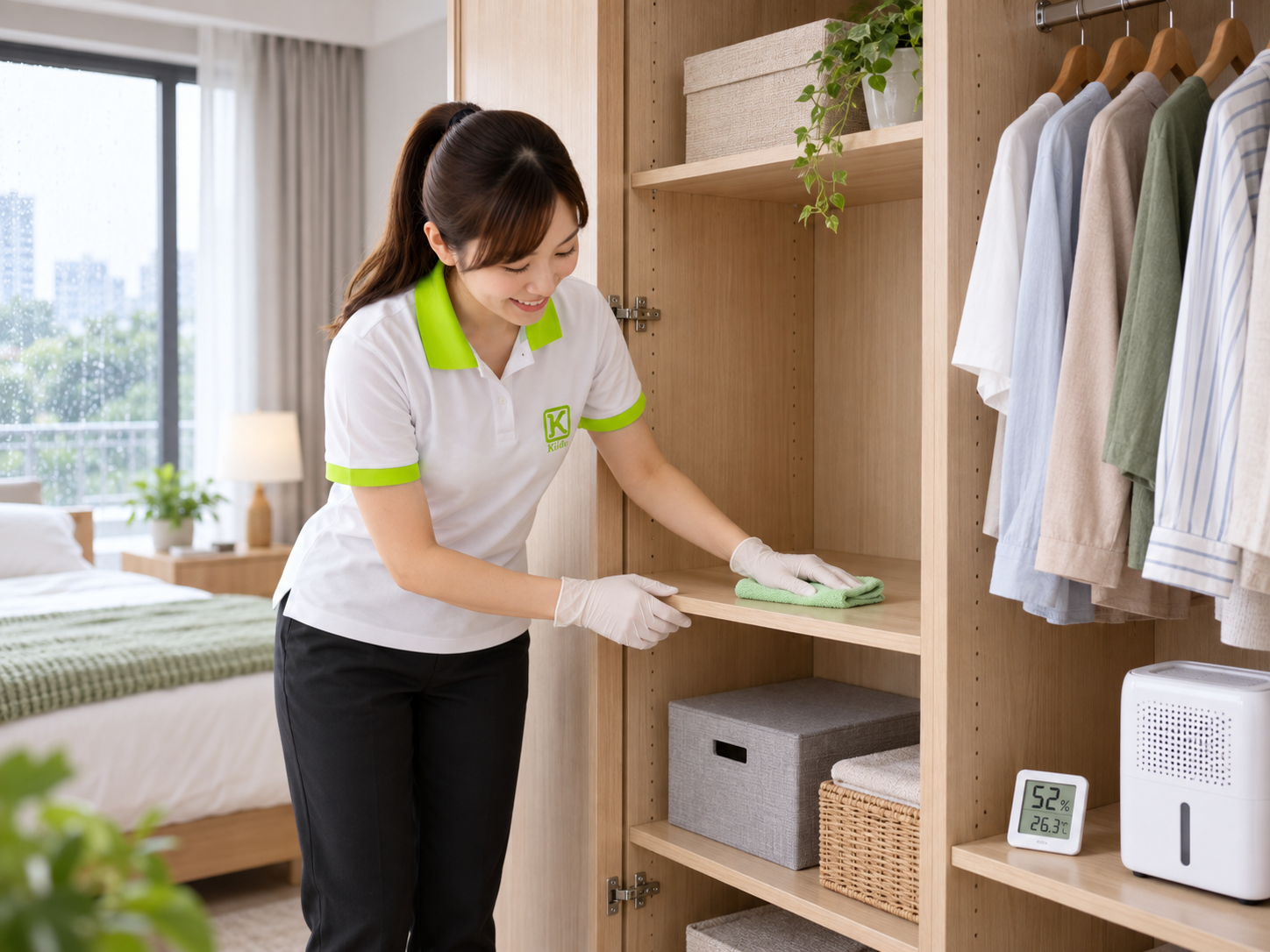
Empty the wardrobe and place affected clothing away from clean items. Inspect shelves, hinges, the back panel, the floor, and the wall behind the cabinet. Clean intact hard surfaces with an appropriate mild detergent solution and dry every corner before returning any belongings.
Wash affected clothing according to the garment care label and the instructions for the laundry product. Hot water is not suitable for every fabric. Delicate, valuable, or heavily affected items may require a textile specialist. Do not return clothing to the wardrobe while either the fabric or cabinet remains damp.
Reduce future moisture by leaving space for air to move around stored items. Avoid overfilling the wardrobe and check the rear wall after periods of heavy rain. Moisture absorbing products can support routine prevention, but they cannot repair a leak or replace a dehumidifier when the room remains consistently humid.
Bathrooms
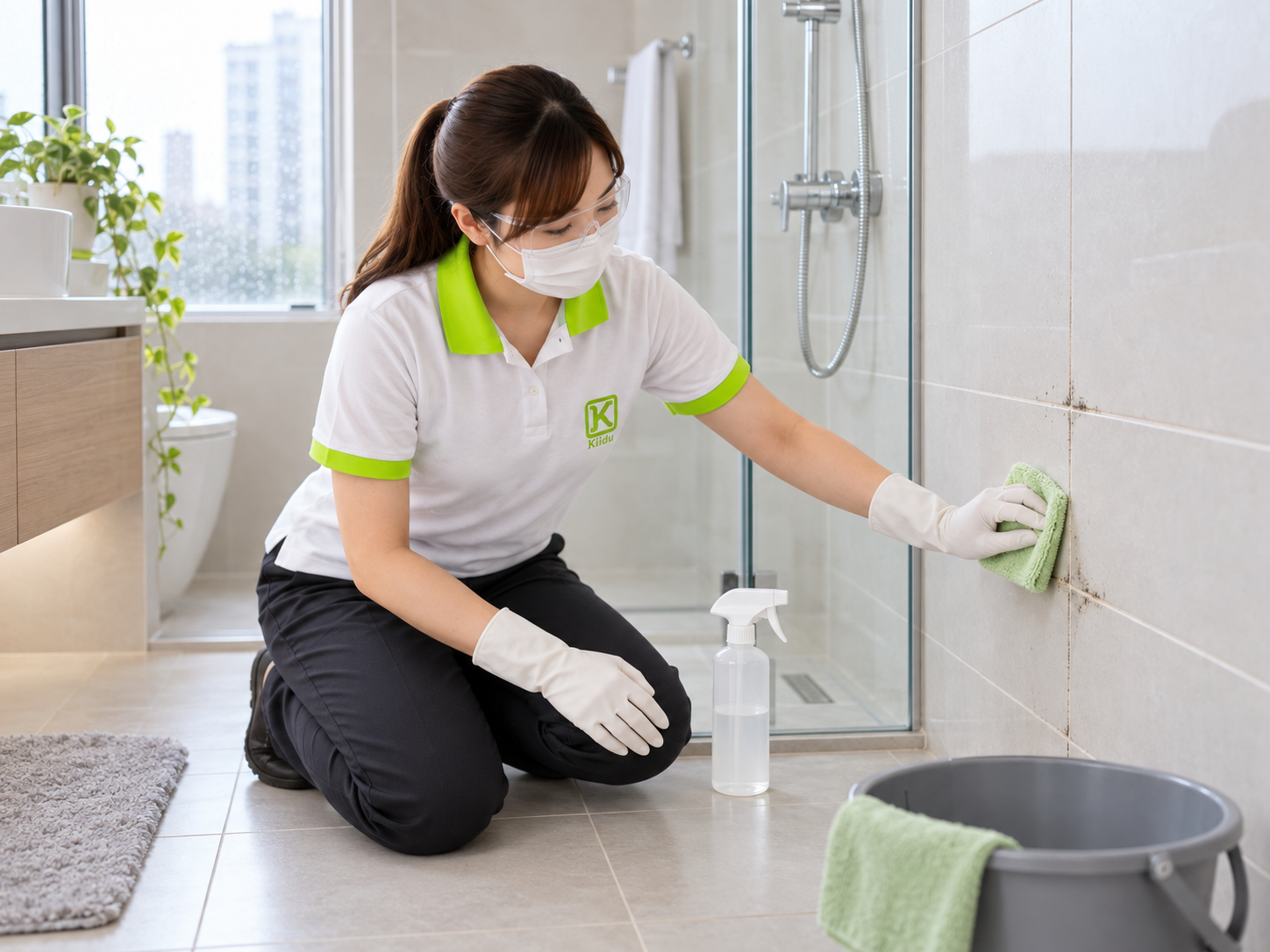
Tile is usually easier to clean than grout or sealant. Use mild detergent and water on intact tile, then rinse if the product instructions require it and dry the area. Grout and silicone can hold moisture. Material with deep or recurring growth may need replacement after the moisture source has been corrected.
Run the exhaust fan during and after bathing, or open a window when outdoor conditions allow moisture to leave the room. Remove standing water from floors and ledges. Hang towels and bath mats so they dry fully, and repair dripping taps, leaking pipes, and damaged sealant promptly.
Air Conditioning Areas
You can clean accessible exterior covers and removable filters only when the manufacturer permits it and the unit is switched off safely. Stop if you see growth on internal coils, fans, insulation, or ductwork. A contaminated system can distribute particles through the home, so ask a qualified air conditioning technician or mold professional to assess internal contamination.
When Porous Materials May Need Disposal
Mold can grow within absorbent materials, making complete cleaning difficult. Ceiling tiles, carpet, underlay, foam, damaged drywall, particleboard, and upholstered items may need to be discarded when growth has entered the material or the item remains damp and musty after appropriate cleaning.
Do not remove large structural sections without assessing the risk of spreading contamination. When disposal is appropriate for a small household item, contain it before carrying it through clean rooms. Ask an experienced professional to handle large, heavy, valuable, or structurally attached materials.
How to Prevent Mold From Returning
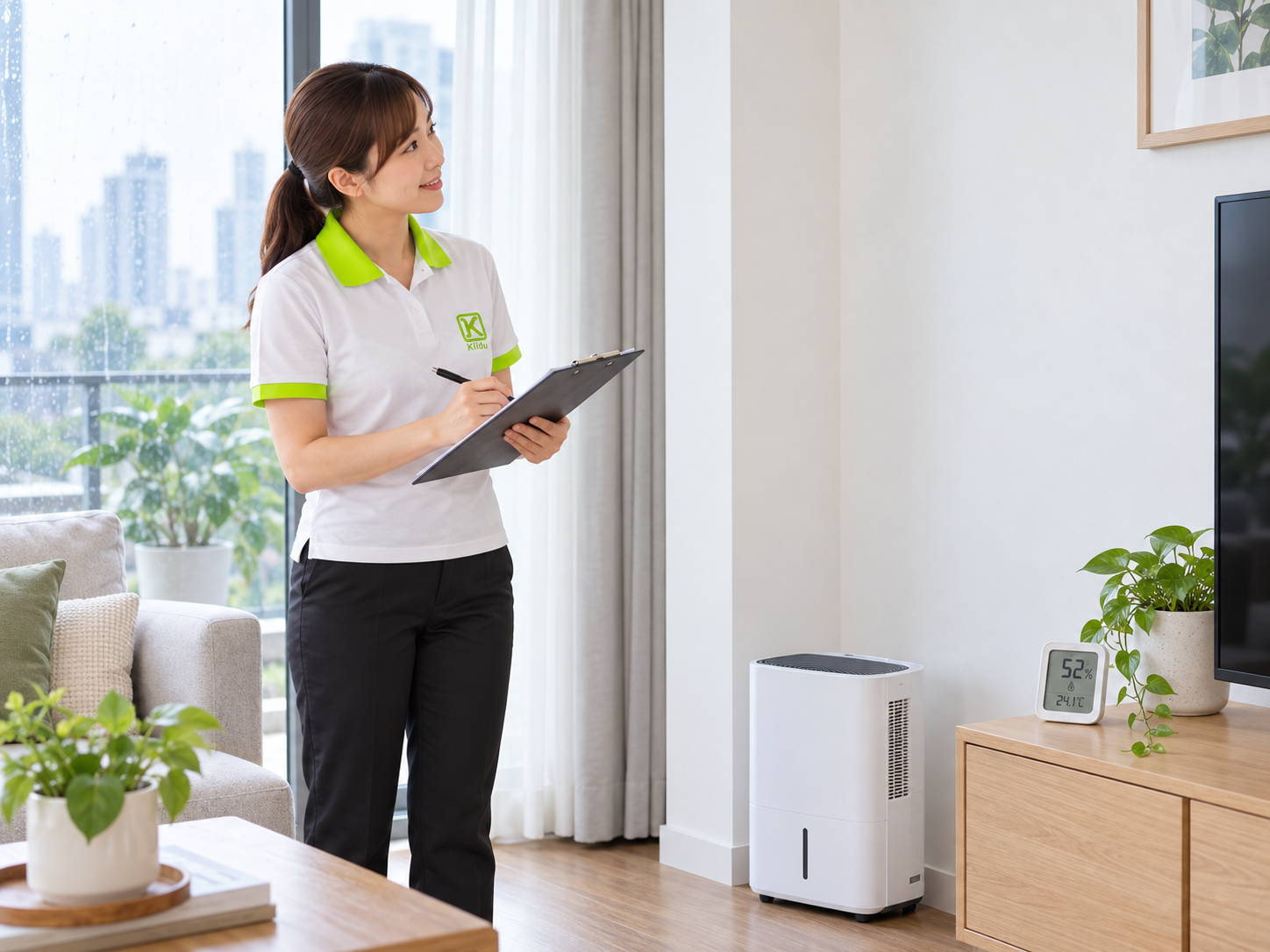
Successful rainy season mold removal in Thailand depends on keeping the area dry after cleanup. Use a digital humidity meter to track indoor conditions. Aim to keep relative humidity below 60 percent, with 30 to 50 percent as a useful target when practical. Air conditioning and dehumidifiers can help, but both need regular cleaning and clear drainage.
Rainy Season Prevention Checklist
• Repair roof, window, plumbing, and air conditioner leaks promptly
• Dry wet surfaces and materials within 24 to 48 hours when possible
• Use exhaust ventilation in bathrooms and kitchens
• Check walls behind wardrobes and large furniture after heavy rain
• Avoid storing damp clothes, towels, shoes, or bedding
• Keep air conditioner drain lines clear and arrange regular servicing
• Monitor rooms that remain closed for long periods
• Inspect previously affected areas for new moisture, odor, or staining
When to Call a Mold Professional
Professional assessment is appropriate when the affected area is larger than about 10 square feet, when growth returns after cleaning, or when the moisture source cannot be identified. You should also seek help for mold hidden behind walls or floors, extensive water damage, sewage contamination, floodwater, structural damage, or suspected contamination inside an air conditioning system.
People with asthma, chronic lung disease, severe mold allergies, or reduced immunity should not perform mold cleanup. The CDC advises these groups to avoid mold damaged areas and the cleanup process because exposure may cause more serious health effects.
Questions to Ask Before Hiring a Professional
• Ask how the company will identify and correct the moisture source.
• Confirm how workers will contain the affected area.
• Request a clear explanation of which materials require removal.
• Check how the team will transport contaminated materials.
• Ask what method they use to confirm that the area is dry.
• Request details of relevant experience and recent references.
Routine Household Support and Professional Remediation
A household helper can support regular bathroom cleaning, laundry routines, drying wet areas, ventilation checks, and early reporting of leaks or musty odors. These tasks help reduce everyday moisture and make developing problems easier to notice.
Routine household support is not a substitute for professional mold remediation. A maid should not be expected to remove widespread mold, open contaminated walls, handle sewage damage, or clean internal air conditioning components without suitable training and equipment.
For regular household support, explore the Kiidu maid service or read the guide to maid services and agencies. Discuss the duties, products, safety limits, and reporting process before work begins.
Conclusion
Rainy season mold removal in Thailand starts with moisture control. Find the leak, condensation, or humidity problem before cleaning. Use suitable protective equipment, clean only manageable areas on appropriate surfaces, and dry every surface completely.
Continue monitoring the area after heavy rain. If mold returns, spreads, affects absorbent building materials, or enters an air conditioning system, arrange professional assessment. A clear boundary between routine household cleaning and specialist remediation protects both the home and the people who live or work in it.
Frequently Asked Questions
What is the first step in rainy season mold removal in Thailand
Identify and correct the moisture source before cleaning. Look for roof or plumbing leaks, condensation, blocked air conditioner drainage, poor ventilation, and indoor humidity above the recommended range. Mold is likely to return if the material remains damp.
Can I paint over mold on a wall
No. Clean the mold, repair the moisture problem, and dry the wall before painting. Paint applied over active mold or damp material may peel and can hide continuing damage.
Is bleach necessary for household mold cleaning
Not always. Mild detergent and water can be suitable for many hard washable surfaces. If you use a bleach product, follow the label, provide fresh air, and never mix it with ammonia, vinegar, detergent, or another cleaner.
How can I prevent mold inside a wardrobe
Keep clothing dry, avoid overfilling the cabinet, allow air to move around stored items, and inspect the wall behind the wardrobe. Use a humidity meter and correct any leak or condensation problem rather than relying only on moisture absorbing products.
Can moldy clothing be washed
Some washable items can be cleaned, but the correct method depends on the fabric. Follow the garment care label and the instructions for the laundry product. Use a textile specialist for delicate or valuable items and discard items that cannot be cleaned safely.
What indoor humidity level helps prevent mold
Keep indoor relative humidity below 60 percent when possible. The EPA identifies 30 to 50 percent as an ideal range for many homes. Use a humidity meter to guide ventilation, air conditioning, or dehumidifier use.
Should visible mold be tested before cleaning
Testing is usually unnecessary when visible mold is present and the moisture problem is clear. Professional testing may be useful in complex cases, but results need expert interpretation and do not replace correction of the water source.
When is mold too extensive to clean myself
Seek professional advice when the affected area is larger than about 10 square feet, when mold returns after cleaning, or when the problem involves hidden growth, sewage, floodwater, structural damage, or an air conditioning system.