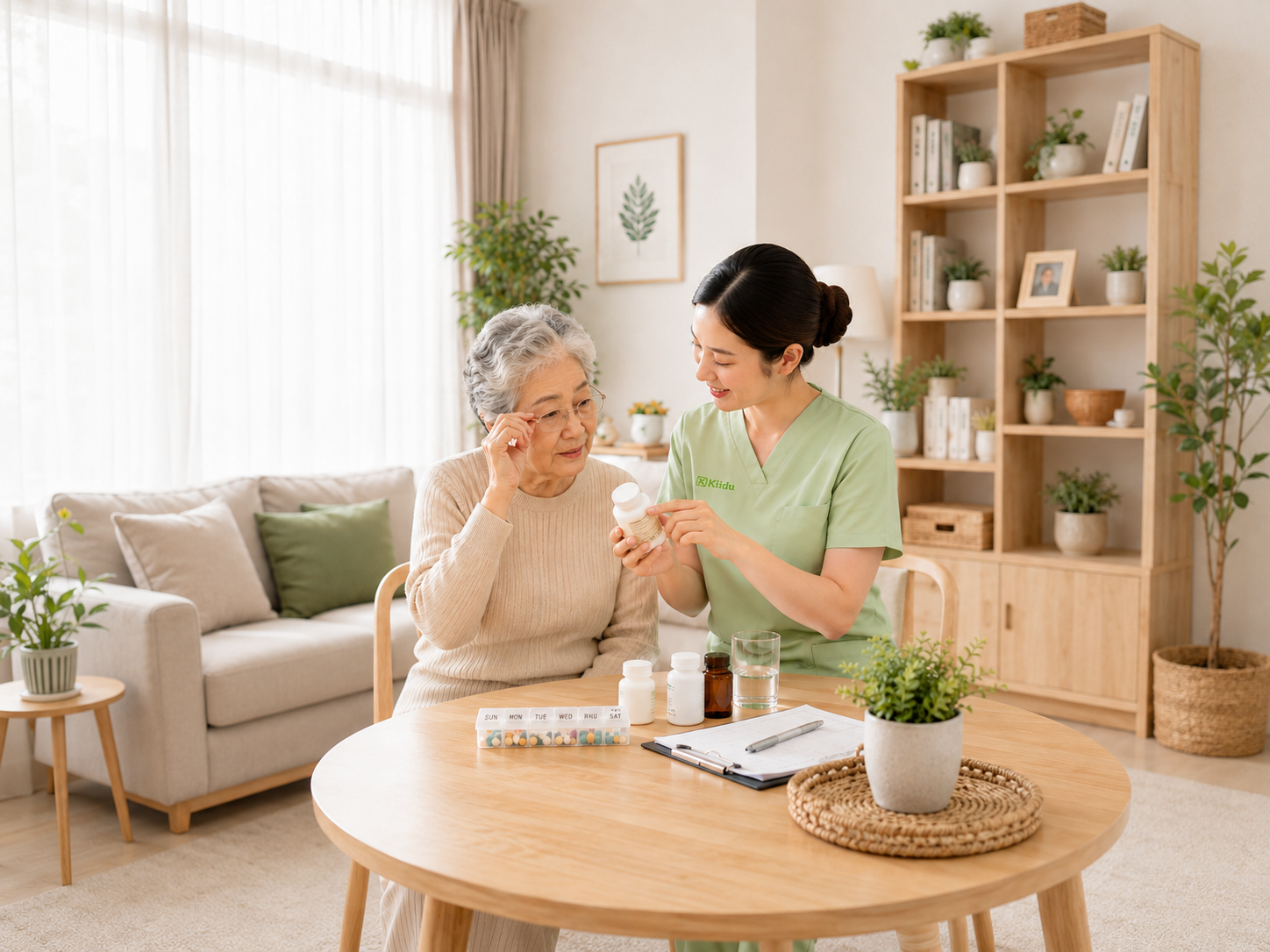
Elderly Care Trends in Thailand 2026
What Families Need to Know
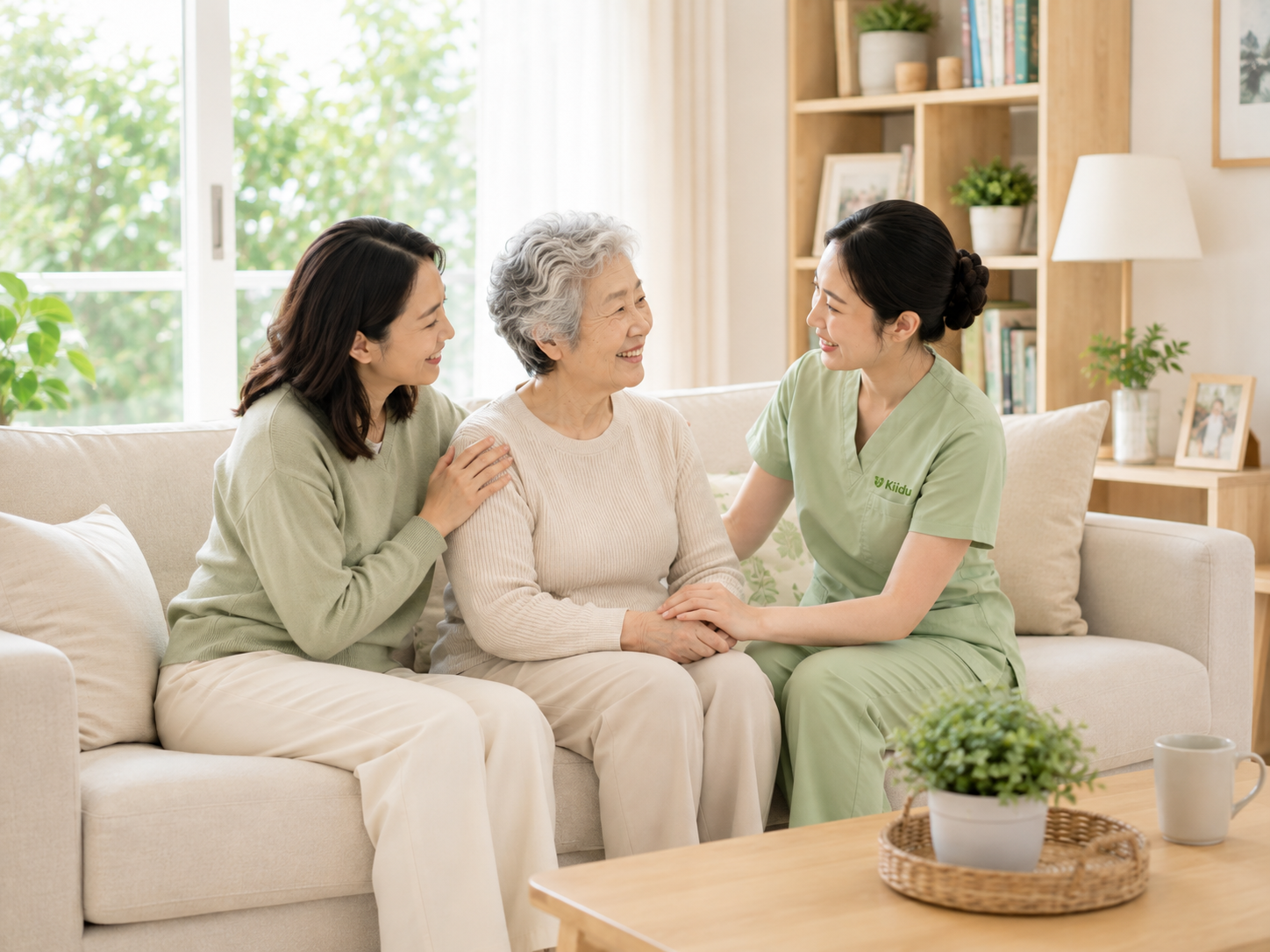
Planning support for ageing loved ones is becoming a priority across Thailand. As household sizes shrink and work demands grow, families need reliable ways to protect safety and dignity without assuming that one care model will suit everyone. Families starting this process can also read Kiidu’s guide to helping ageing parents at home in Bangkok.
A 2026 UNFPA Thailand policy brief cites projections that nearly one third of Thailand’s population will be over 60 by 2030. That shift increases the need for early planning, trained workers, sustainable long term support, and clearer coordination between families and professionals.
Key Takeaways
- Professional home assistance is increasingly complementing family care rather than replacing it.
- Ageing at home can support familiar routines when the home, staffing, and clinical support are suitable.
- A caregiver supports daily living, while a nurse works within a licensed clinical scope.
- Fall prevention, dementia aware support, and social connection are becoming central to care planning.
- Technology may support communication and response, but it cannot guarantee safety or replace people.
- The strongest plans combine clear responsibilities, regular review, and an escalation route for changing needs.
Why Elderly Care Trends in Thailand 2026 Matter Now
Thailand is moving through demographic change at exceptional speed. The Department of Older Persons statistics hub publishes current data, while UNFPA Thailand describes the country’s ageing rate as one of the fastest in ASEAN. These official sources offer a stronger basis for planning than unsupported market predictions.
Low birth rates, smaller families, migration, and demanding work schedules can reduce the number of relatives available for regular support. This does not mean that Thai family care is disappearing. It means that many households may need structured help to supplement the emotional and practical support that relatives continue to provide.
Thai, expatriate, and multigenerational families may face different language, cultural, financial, and coordination challenges. Understanding elderly care trends in Thailand 2026 helps each household plan around its real capacity instead of waiting for a crisis.

Seven Trends Shaping Elderly Care
1. Thailand’s Ageing Population Is Reshaping Care
A larger older population will increase demand for primary care, long term care, rehabilitation, home support, age friendly environments, and a better prepared care workforce. The issue is not only the number of older adults. Families must also plan for changes in mobility, cognition, chronic conditions, income, housing, and the availability of relatives who can help.
For families, the practical response is to discuss preferences early, review the home, identify likely care costs, and agree who will coordinate appointments, documents, emergencies, and paid support. Early planning cannot remove every risk, but it can reduce avoidable gaps.
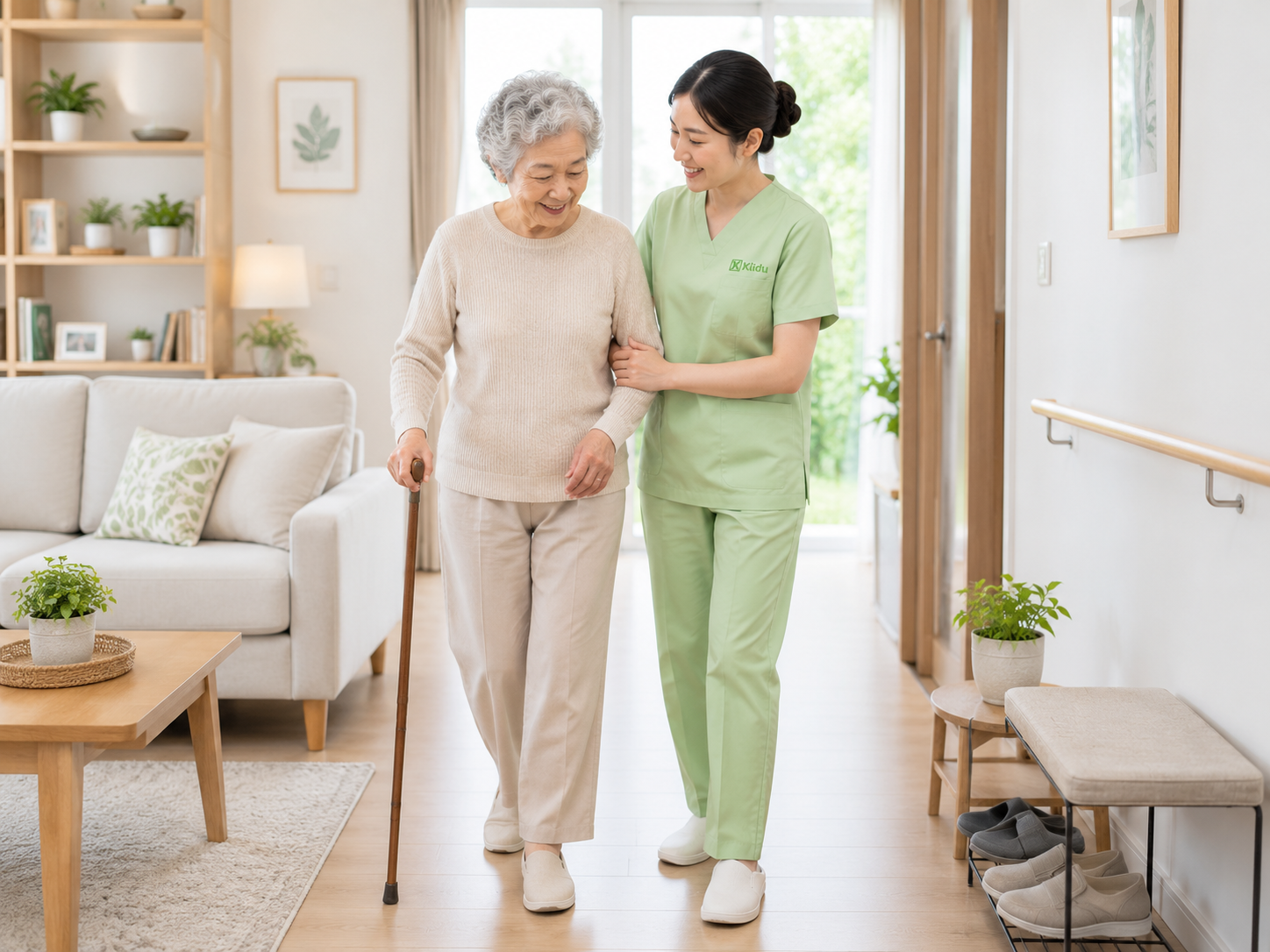
2. More Families Are Planning for Ageing at Home
Ageing at home means enabling an older adult to remain in a familiar residence as needs change. It may preserve routines, personal choice, neighbourhood ties, and family contact. It is suitable only when the person, the environment, available support, and emergency arrangements can work together safely.
The WHO guidance on ageing and health focuses on functional ability and the relationship between a person’s capacities and environment. Familiarity alone does not make a home safe. Families should review bathrooms, lighting, stairs, walking routes, emergency access, and the older adult’s ability to use the space.
- Remove or secure loose rugs and clutter from walking routes.
- Improve lighting in hallways, bedrooms, bathrooms, and stair areas.
- Install appropriate grab bars and nonslip bathroom surfaces where recommended.
- Keep emergency contacts and communication devices easy to reach.
- Ask a qualified professional to assess mobility or rehabilitation needs when appropriate.
3. Professional Senior Caregivers Are Filling Practical Gaps
A senior caregiver may support bathing, dressing, toileting, mobility, meals, companionship, daily routines, appointments, and observation, depending on the person’s needs and the caregiver’s training. Families can review the practical steps in Kiidu’s guide to hiring a senior caregiver in Bangkok in 2026.
A caregiver generally provides nonclinical support. A registered nurse works within a licensed clinical scope and may perform appropriate nursing assessments and procedures. Caregivers should not change prescriptions, make clinical decisions, or perform restricted procedures unless they hold the required qualification and authorisation.
A live in arrangement may provide greater continuity within agreed working hours, but one live in caregiver is not the same as continuous care. Around the clock coverage usually requires planned shifts, rest periods, backup staff, and possibly nursing input.
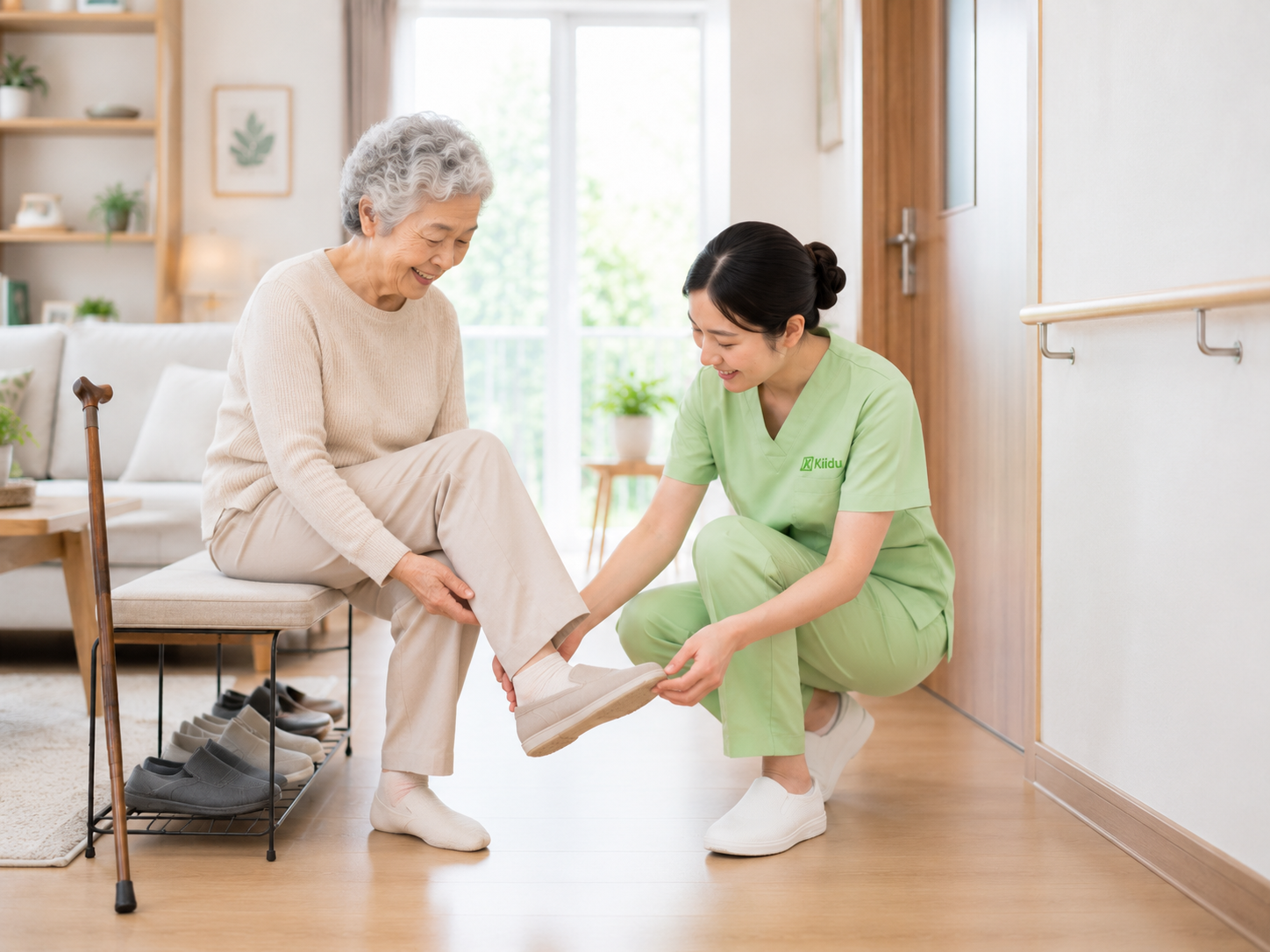
4. Personalised Care Plans Are Becoming More Important
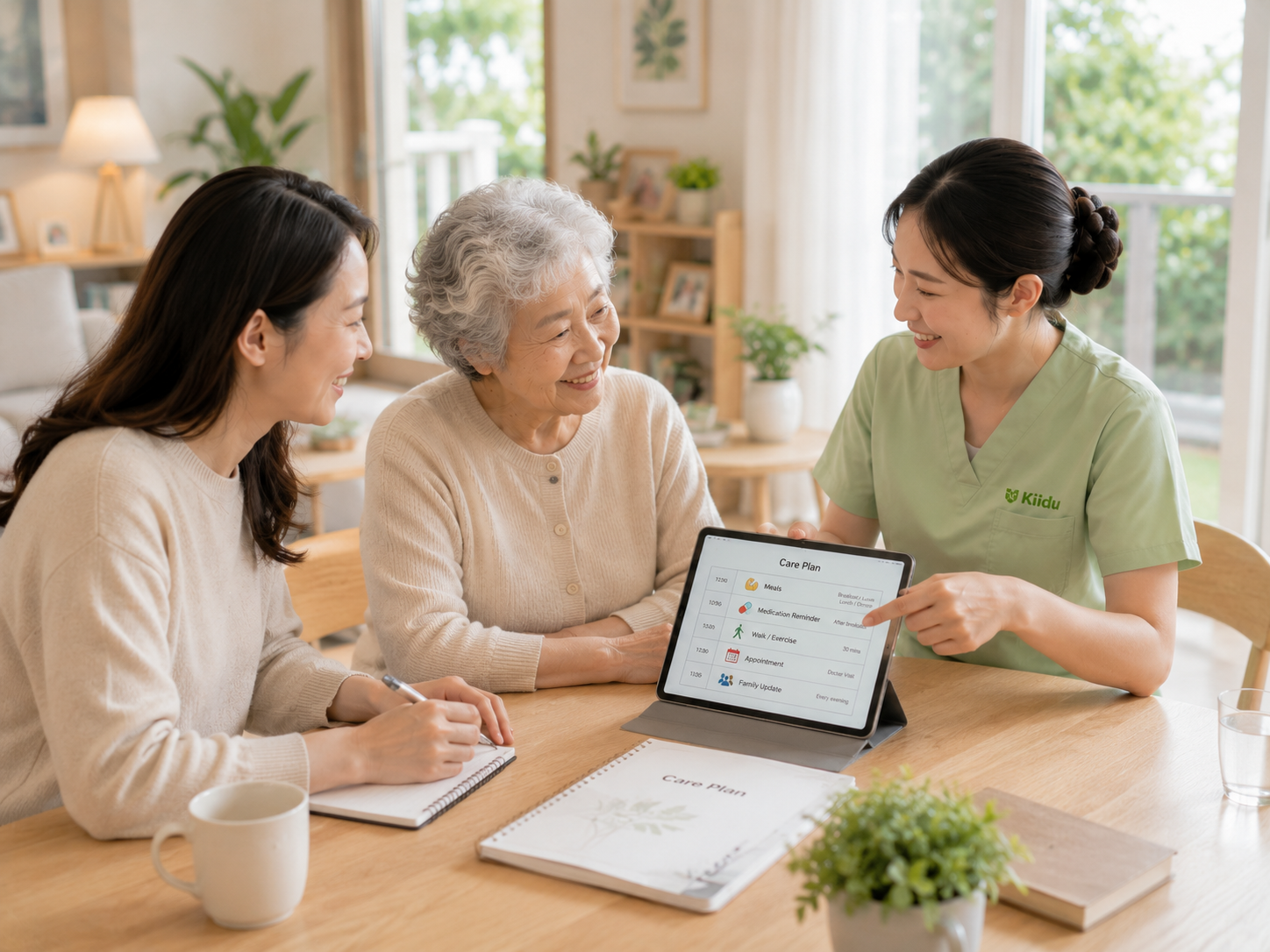
Older adults with the same diagnosis may have very different routines, abilities, communication styles, risks, and preferences. A useful care plan should consider activities of daily living, mobility, cognition, nutrition, medicines, sleep, communication, social needs, home safety, language, culture, and family availability.
The plan should state who is responsible for each task, what the caregiver may do, what requires a nurse or clinician, which hospital the family prefers, who receives updates, and when the situation must be escalated. Review the plan after onboarding and whenever health or independence changes.
5. Prevention and Safer Homes Are Becoming Central
Preventive support includes safer movement, suitable nutrition, hydration, oral care, medication review by qualified professionals, meaningful activity, social connection, and early attention to changes in appetite, sleep, mood, balance, or cognition. Caregivers can observe and report changes, but diagnosis and treatment belong to qualified healthcare professionals.
The WHO falls fact sheet shows why prevention should consider personal health, behaviour, medicines, mobility, and the environment. Grab bars or brighter lights may help, but a single home modification cannot address every risk.
Social wellbeing also matters. The WHO guidance on mental health in older adults identifies social isolation and loneliness as important risks. Regular conversation, family contact, community activity, and appropriate professional support can form part of a broader care plan.
6. Dementia Aware Care Needs Greater Attention
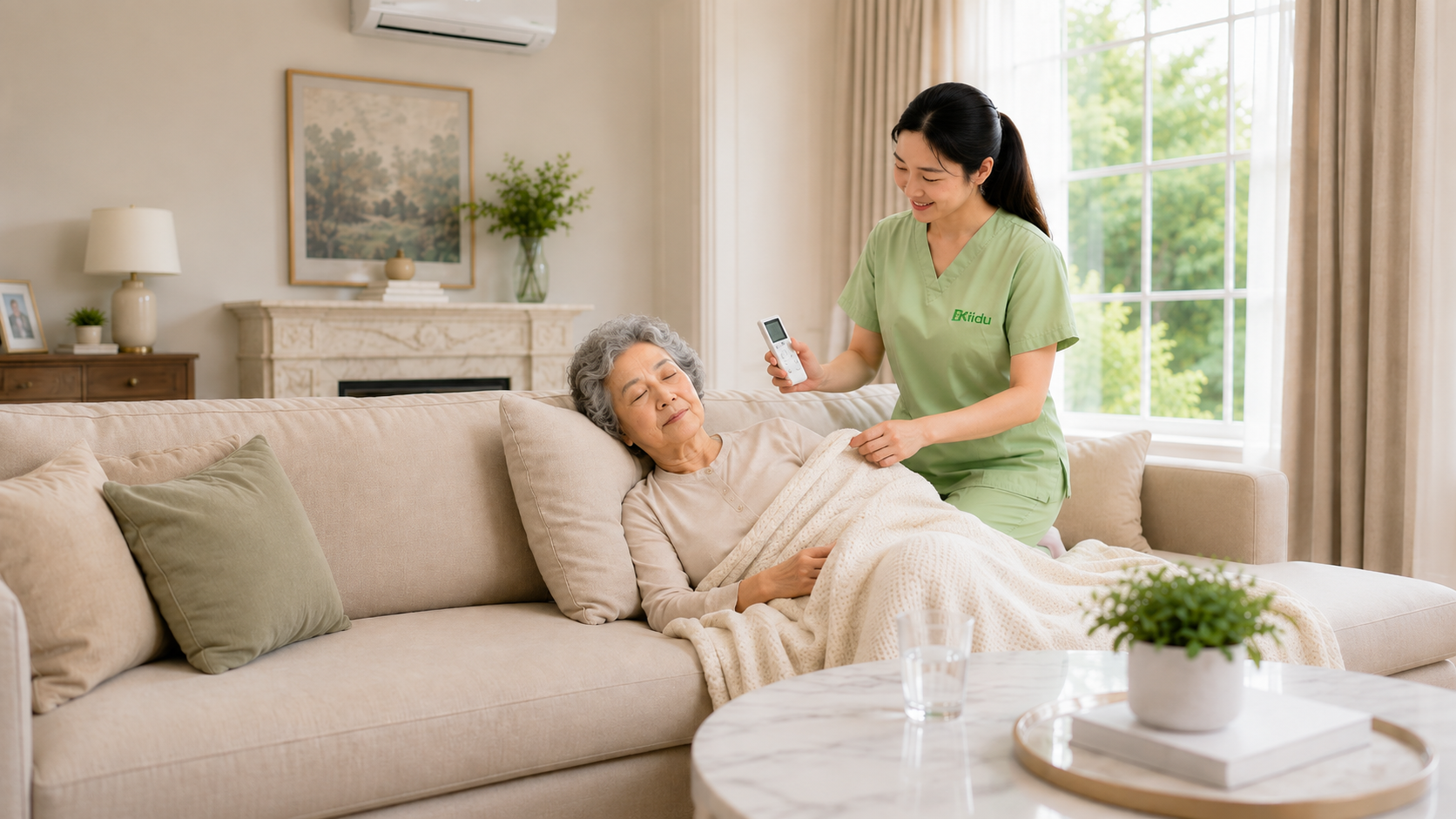
The WHO dementia fact sheet explains that dementia affects people living with the condition as well as carers, families, and society. Care may involve predictable routines, patient communication, familiar activities, safer environments, clinical assessment, caregiver education, and planned respite.
Families should prepare for wandering risk, changes in judgement, sleep disruption, distress, or behaviour changes with professional input when needed. Safety measures should be proportionate, should not create new hazards, and should respect the person’s rights and dignity. No single communication technique or environment works for everyone.
7. Technology and Blended Care Are Expanding Options
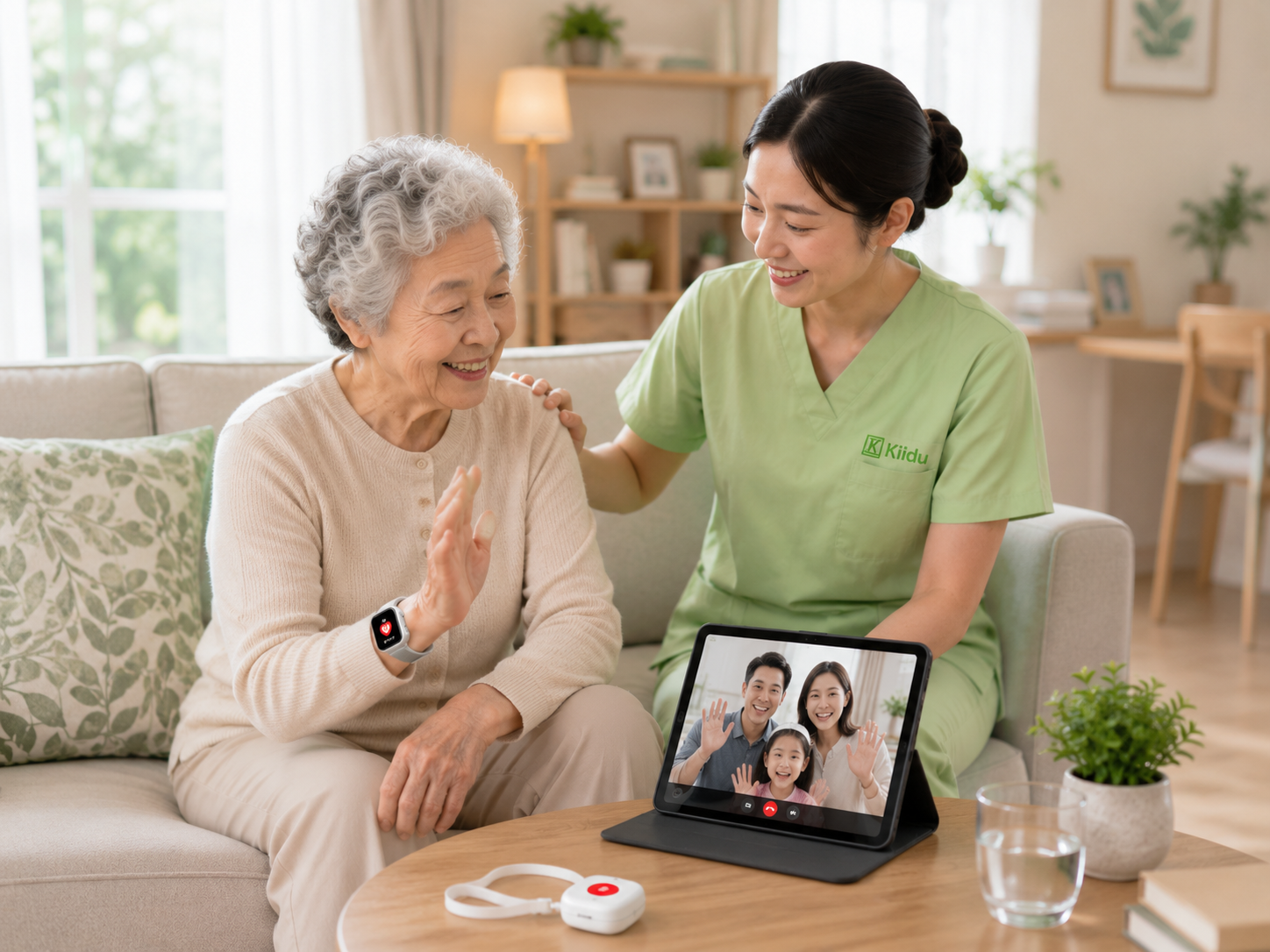
Technology is one of the most visible elderly care trends in Thailand 2026. It may help families receive alerts, share updates, organise appointments, and maintain contact. It works best when devices are reliable, easy for the older adult to use, and supported by a clear human response plan.
| Technology | Potential use | Important caution |
|---|---|---|
| Wearable alert | Request help or notify a contact | Test the device and response process regularly |
| Fall detection | Flag a possible incident | Detection is not guaranteed and alerts need a responder |
| Medication reminder | Support an agreed routine | It cannot confirm correct use or replace clinical review |
| Video or activity monitoring | Support remote check ins | Use informed consent, secure access, and private zones |
| Location device | Support an individual wandering plan | Use proportionately and respect rights and privacy |
Blended care combines family involvement with professional caregivers, nurses, doctors, therapists, community services, respite, or residential care. It can adapt as needs change, but it requires one shared plan, clear communication, consent, and defined responsibility for emergencies.
How Families Can Plan Quality Elderly Care
- Assess the older adult’s daily living abilities, mobility, cognition, health needs, routines, home environment, and preferences.
- Choose a care model that matches the actual level of nonclinical and clinical support required.
- Verify identity, legal work status where applicable, experience, references, training, language ability, and emergency knowledge.
- Write clear duties, working hours, rest periods, reporting expectations, privacy rules, and escalation steps.
- Review the arrangement after onboarding and whenever health, mobility, cognition, or family capacity changes.
Families comparing settings can use Kiidu’s guide to home care and nursing homes in Thailand. The decision should consider safety, clinical needs, personal preferences, family capacity, staffing quality, emergency response, and total cost.
| Care option | May suit | Important limit |
|---|---|---|
| Family support | Lighter needs and strong family availability | Availability and caregiver burden may change |
| Senior caregiver | Nonclinical daily living support and companionship | Does not replace licensed clinical care |
| Nurse or home nursing | Defined clinical assessment and procedures | Scope, schedule, and cost must be confirmed |
| Residential care | Needs that cannot be met safely in the available home | Quality varies and relocation may be difficult |
| Blended arrangement | Changing or mixed needs | Requires strong coordination and a shared plan |
How Kiidu Supports Families
Kiidu helps families in Bangkok and other parts of Thailand explore senior caregiver options based on the older adult’s needs, schedule, language, location, and household preferences. Families can review available profiles, consider relevant experience and skills, and interview candidates before making a hiring decision.
Ask which identity, employment, reference, training, and background checks apply to each candidate. Agree on duties in writing and confirm when a nurse or another licensed professional is required. The right match depends on safety, capability, communication, personality, and fit with the family’s routines, not only years of experience.
Conclusion
The central lesson from elderly care trends in Thailand 2026 is simple. Families should plan before a crisis, listen to the older adult, distinguish daily support from clinical care, and build an arrangement that can change over time. Ageing at home, residential care, and blended support can all be appropriate when they match the person’s needs and preferences.
Start with a realistic assessment, choose the least restrictive safe option, define responsibilities, and review the plan regularly. Reliable care is not created by one device or one worker. It comes from good matching, clear communication, qualified support, and a family that remains involved in the decisions that matter.
Frequently Asked Questions
What are the main elderly care trends in Thailand 2026?
The main trends are rapid population ageing, greater interest in ageing at home, growing use of professional caregivers, personalised care planning, fall prevention, dementia aware support, technology, and blended models that coordinate families and professionals.
Is home care better than a nursing home?
Neither option is best for everyone. Home care may suit an older adult whose needs can be managed safely at home. Residential care may be more appropriate when the available home, staffing, or clinical support cannot manage the person’s risks and needs.
What is the difference between a senior caregiver and a nurse?
A senior caregiver generally supports nonclinical daily living, routines, mobility, meals, and companionship. A registered nurse works within a licensed clinical scope and may perform appropriate assessments and nursing procedures. Some families need both roles.
Does a live in caregiver provide continuous care?
Not by themselves. A live in caregiver still needs defined working hours, sleep, rest, and days off. Continuous coverage normally requires planned shifts, backup staff, and possibly nursing input, depending on the older adult’s needs.
Can technology replace a caregiver?
No. Alerts, monitoring, reminders, and video calls may support a care plan, but devices can fail, miss events, or create privacy concerns. Technology needs consent, testing, secure access, and a person who can respond.
How should families check a senior caregiver?
Confirm identity, legal work status where applicable, employment history, references, relevant training, language ability, and emergency knowledge. Ask which checks were completed, interview the candidate, define duties in writing, and monitor the arrangement during onboarding.
What helps reduce fall risk at home?
Review mobility, vision, medicines, footwear, balance, cognition, lighting, bathrooms, stairs, and walking paths. A doctor, physiotherapist, occupational therapist, or another qualified professional can recommend changes suited to the person’s condition.